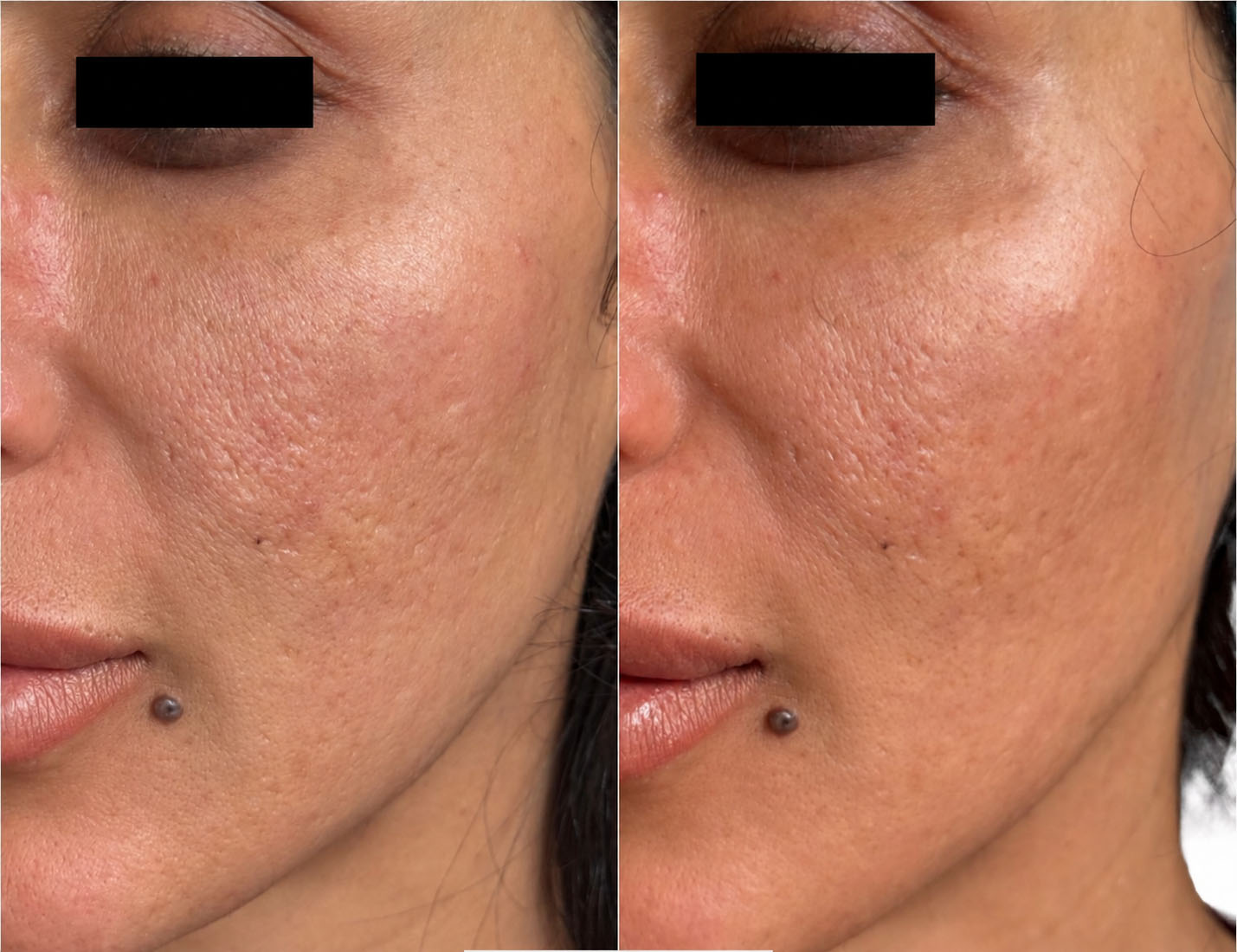
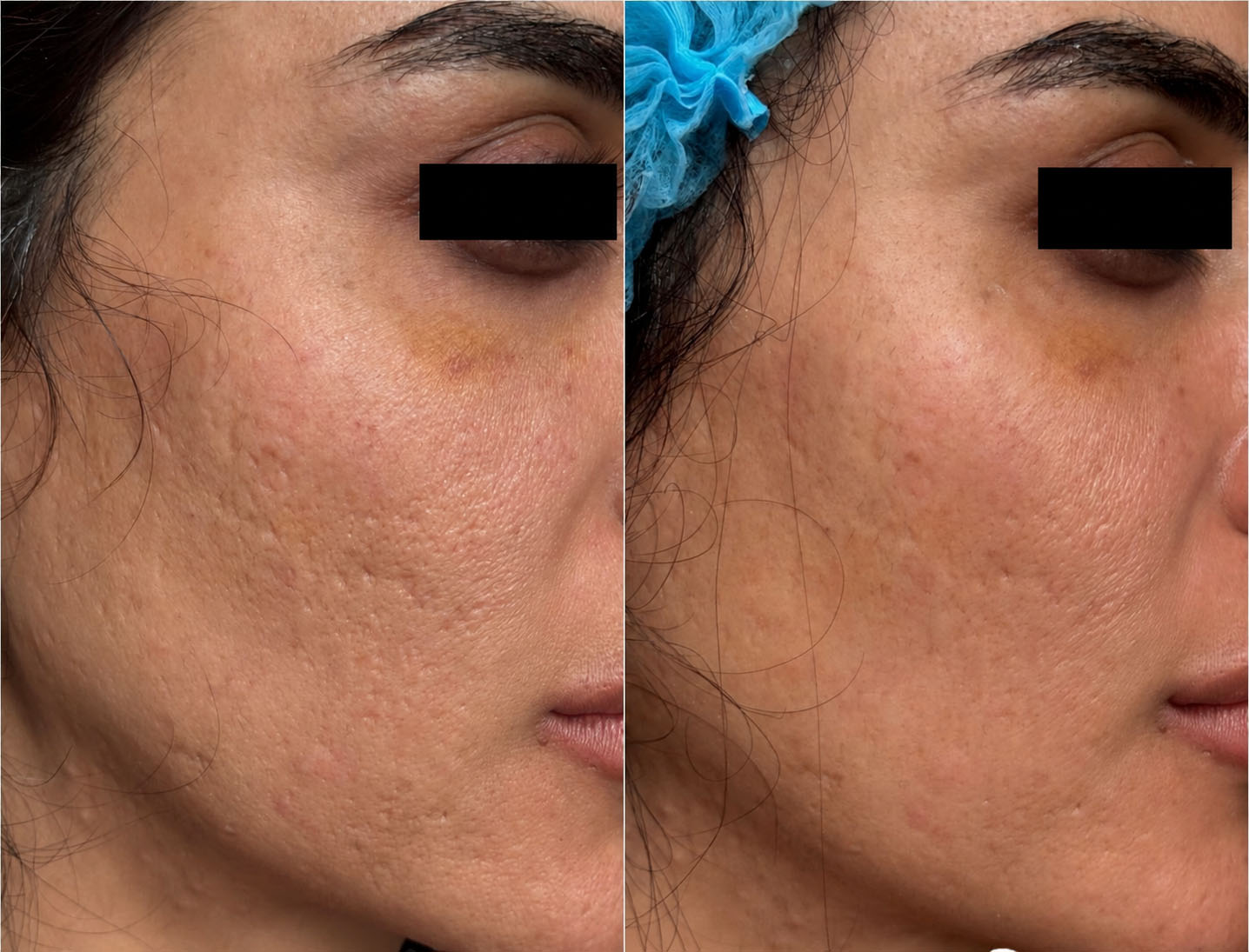
Post-Procedure Recovery: Structural vs Passive Support
After resurfacing or chemical remodeling, recovery must be managed with a clear distinction:
comfort and barrier support are useful, but they are not equivalent to
active dermal remodeling. In complex acne scars, confusing these roles
often delays or limits the final outcome.
1) Passive Occlusion
Occlusive barriers can reduce transepidermal water loss (TEWL) and improve comfort.
However, excessive occlusion may retain heat, increase local maceration,
and provides no active signal for dermal restructuring.
2) Surface-Only Hydration
Emollients and superficial hydrators are valuable for tolerance, dryness and tightness.
Their action remains largely epidermal, which is helpful for comfort but
should not be mistaken for deep remodeling.
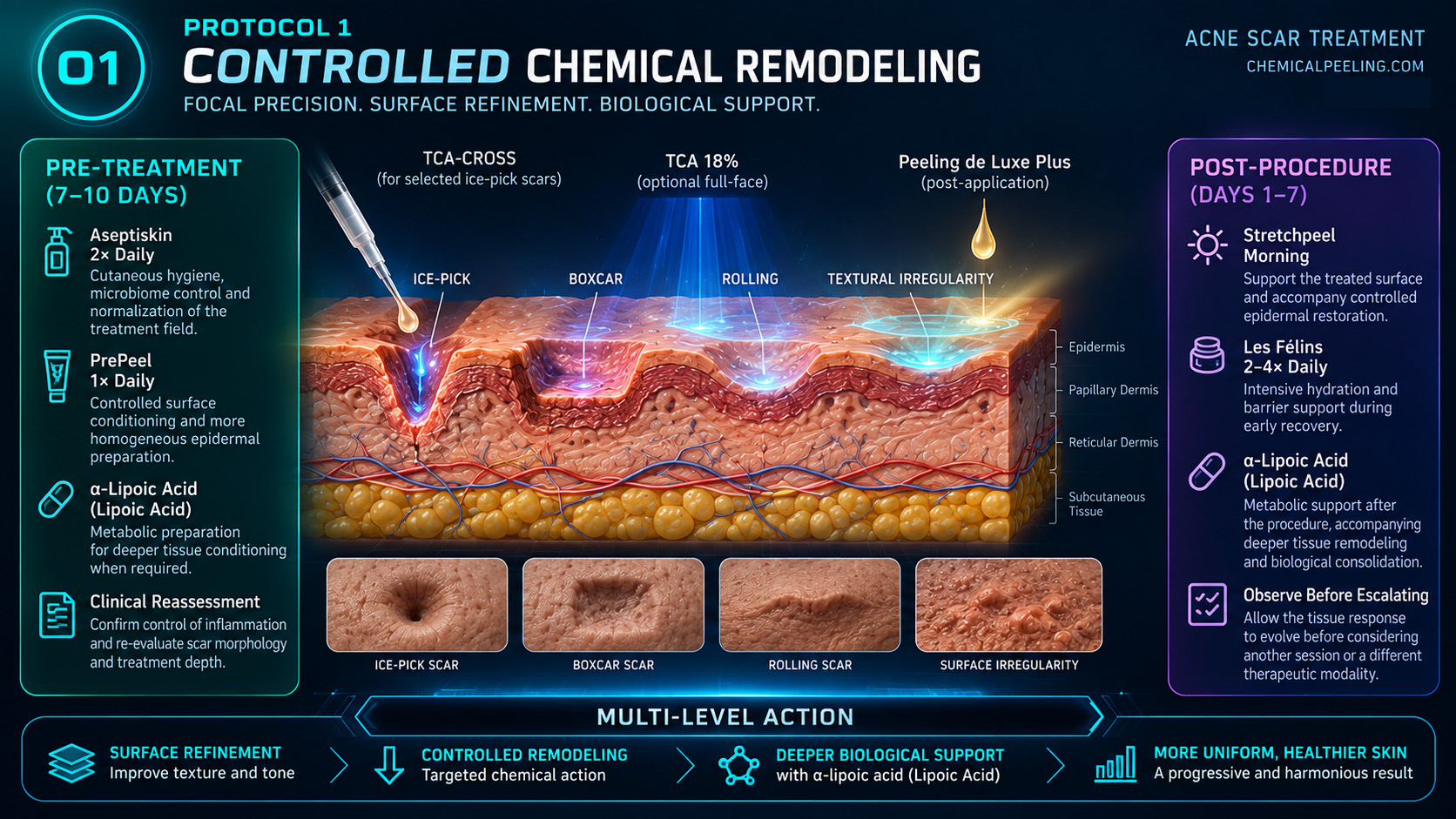
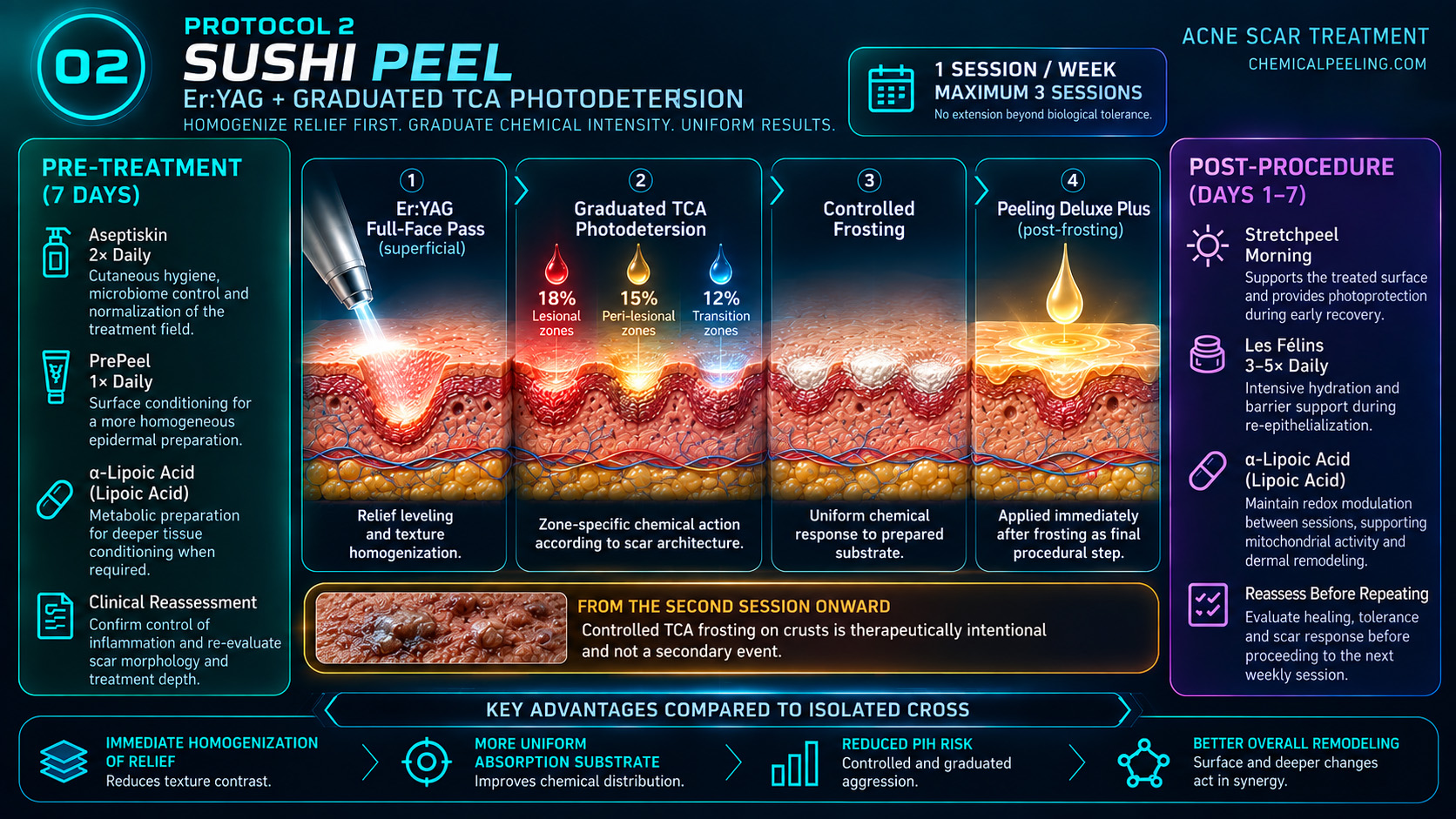
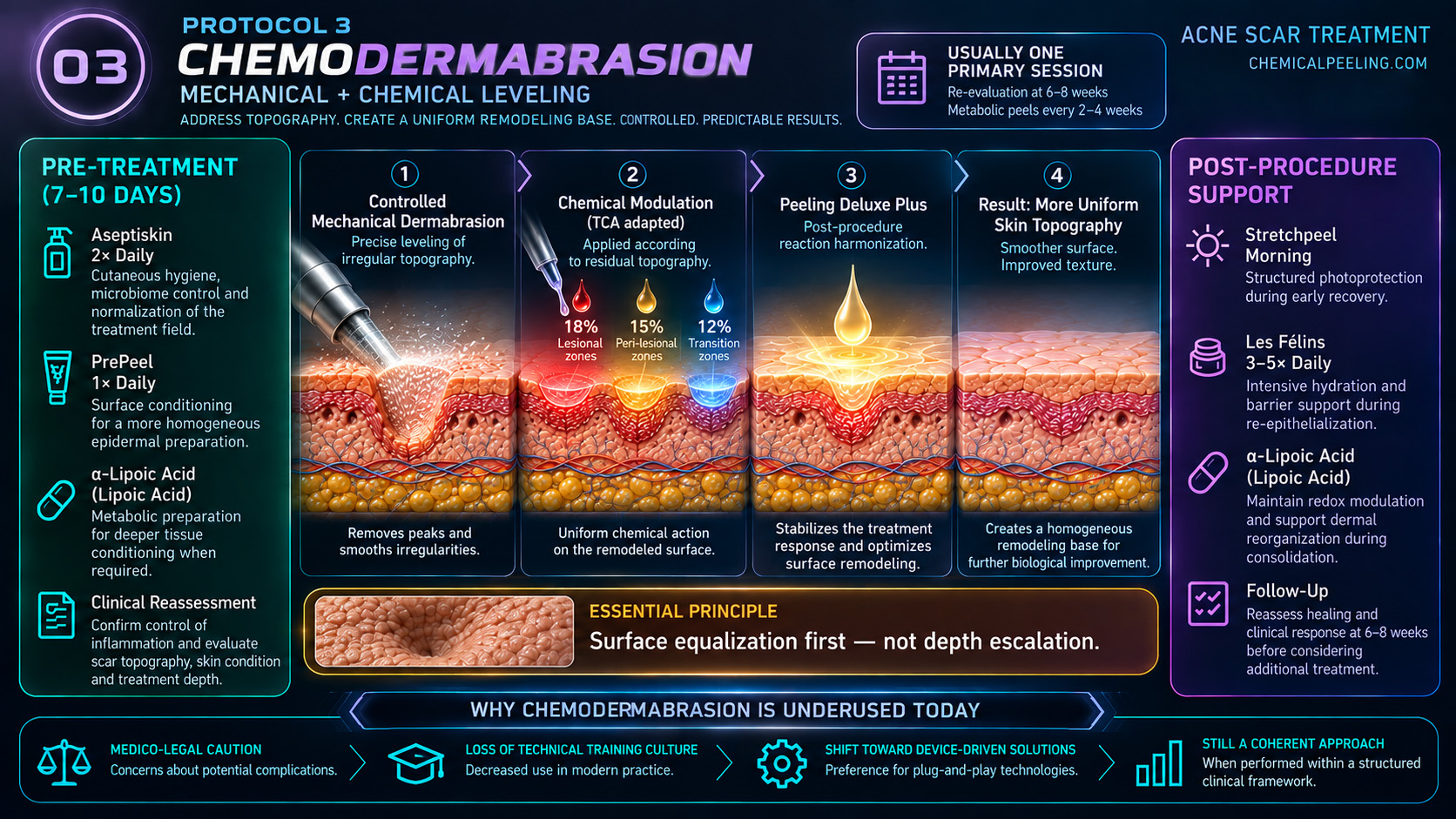
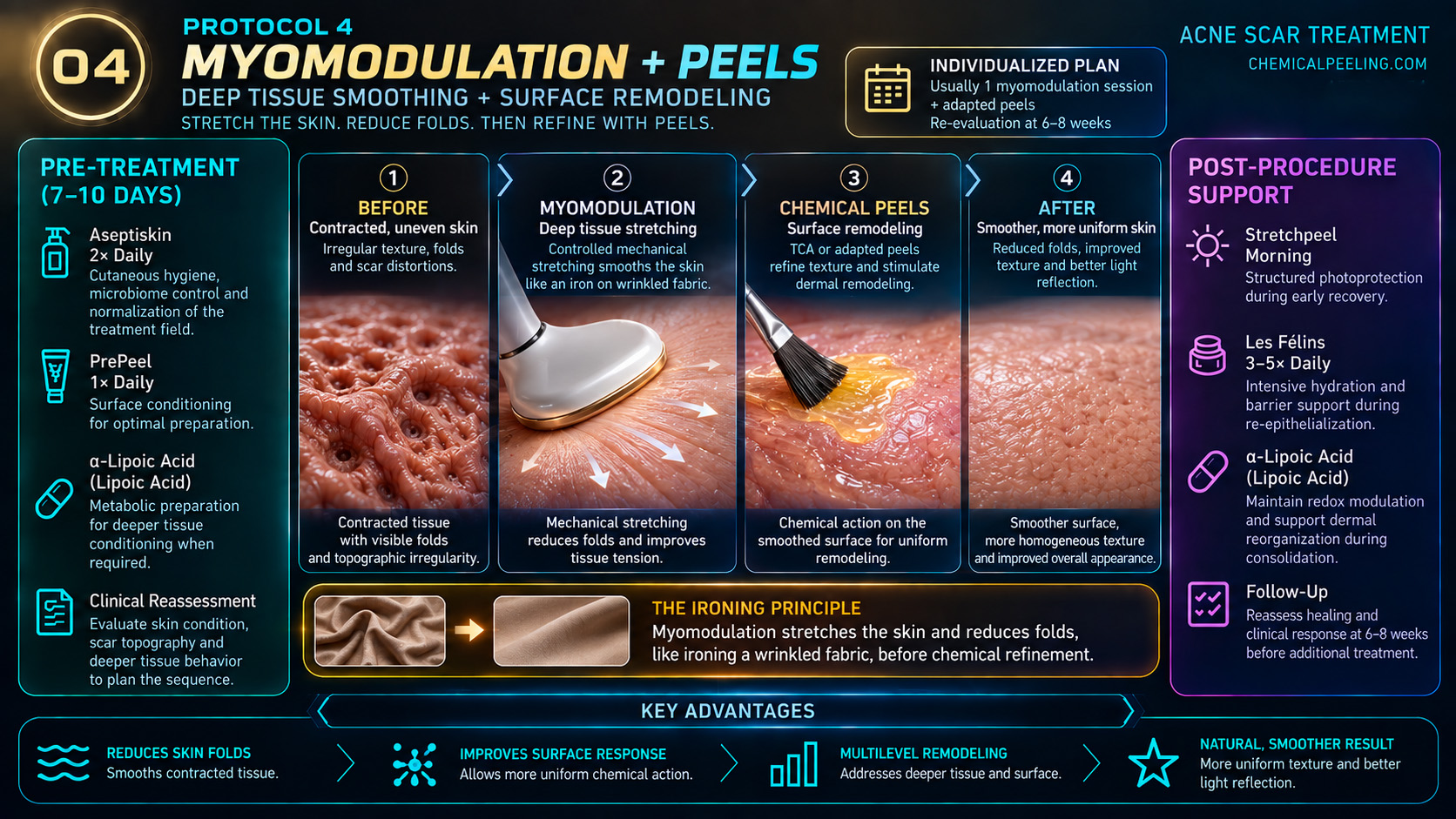
3) Active Metabolic Support
Complex scars benefit from structured metabolic consolidation between sessions.
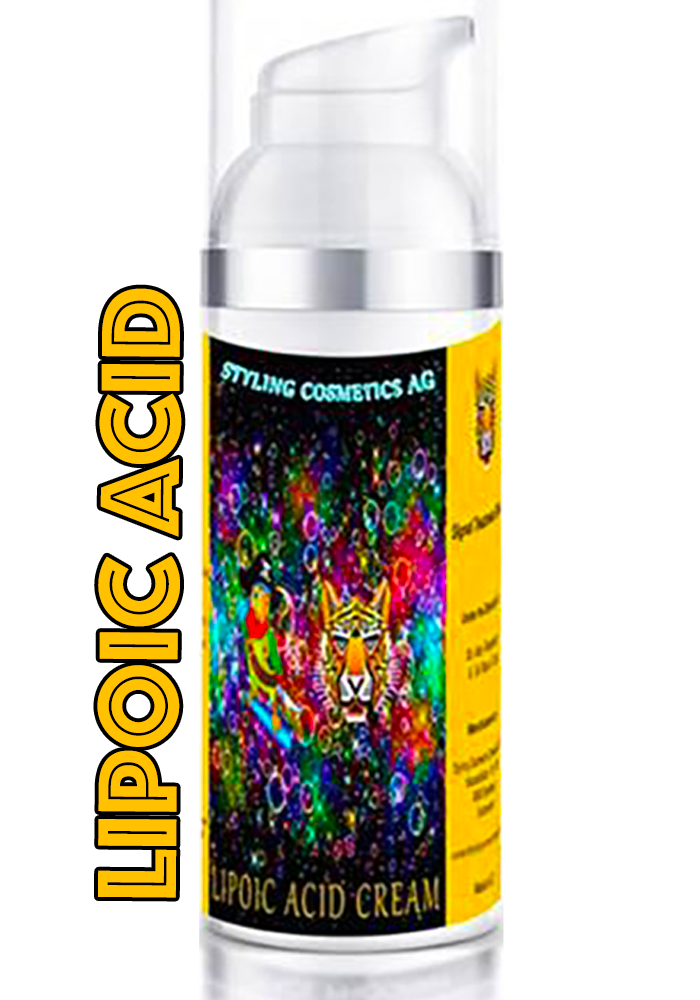
Redox modulation — including alpha-lipoic acid support — helps optimize
oxidative signaling, supports mitochondrial function, and can improve the quality
of interval-based dermal reorganization.
Practical takeaway:
Use comfort measures when needed — but do not let passive recovery replace
the structured remodeling phase. In complex acne scars, outcomes depend on
sequencing, consolidation, and the hierarchy of biological signals.