Accéder au contenu principal
Core Science · Skin Biology · Metabolic Interaction

Biological Principles of
Metabolic Peels

Understanding how metabolic peel systems interact with epidermal signaling, barrier dynamics, inflammatory modulation, keratinocyte adaptation, and biological tissue equilibrium.

Biological Targets
  • Barrier homeostasis
  • Keratinocyte signaling
  • Inflammatory modulation
  • TEWL stability
  • Lipid matrix preservation
  • Dynamic acid buffering
Conceptual representation of epidermal signaling, dynamic tissue interaction, and biological modulation within metabolic peel systems.
SCIENTIFIC NAVIGATION

Biological Principles
Table of Contents

Explore the scientific architecture of metabolic peels through barrier biology, hydration dynamics, epidermal signaling, controlled inflammation, tissue adaptation, and modern biological modulation protocols.

SECTION 02 · BIOLOGICAL EQUILIBRIUM

Skin Homeostasis and
Biological Stability

Human skin is not a passive surface but a highly dynamic biological ecosystem continuously regulating hydration, barrier integrity, inflammatory balance, epidermal renewal, microbiological interaction, and cellular communication.

Metabolic peel systems interact with this living equilibrium through controlled biochemical modulation rather than through uncontrolled tissue aggression. The objective is not simply visible exfoliation, but the progressive influence of biological behavior and tissue response.

Barrier Integrity

Epidermal cohesion and lipid organization participate directly in hydration retention and biological defense mechanisms.

Cellular Communication

Keratinocyte signaling pathways continuously regulate adaptation, inflammation, differentiation, and tissue equilibrium.

Dynamic Adaptation

The skin constantly adapts to external stress through biochemical buffering, metabolic regulation, and repair signaling.

Controlled Modulation

Modern metabolic approaches aim to influence tissue behavior progressively without destabilizing biological homeostasis.

Homeostasis Framework Barrier · Lipid Matrix · TEWL Stability
Skin homeostasis and epidermal biological equilibrium
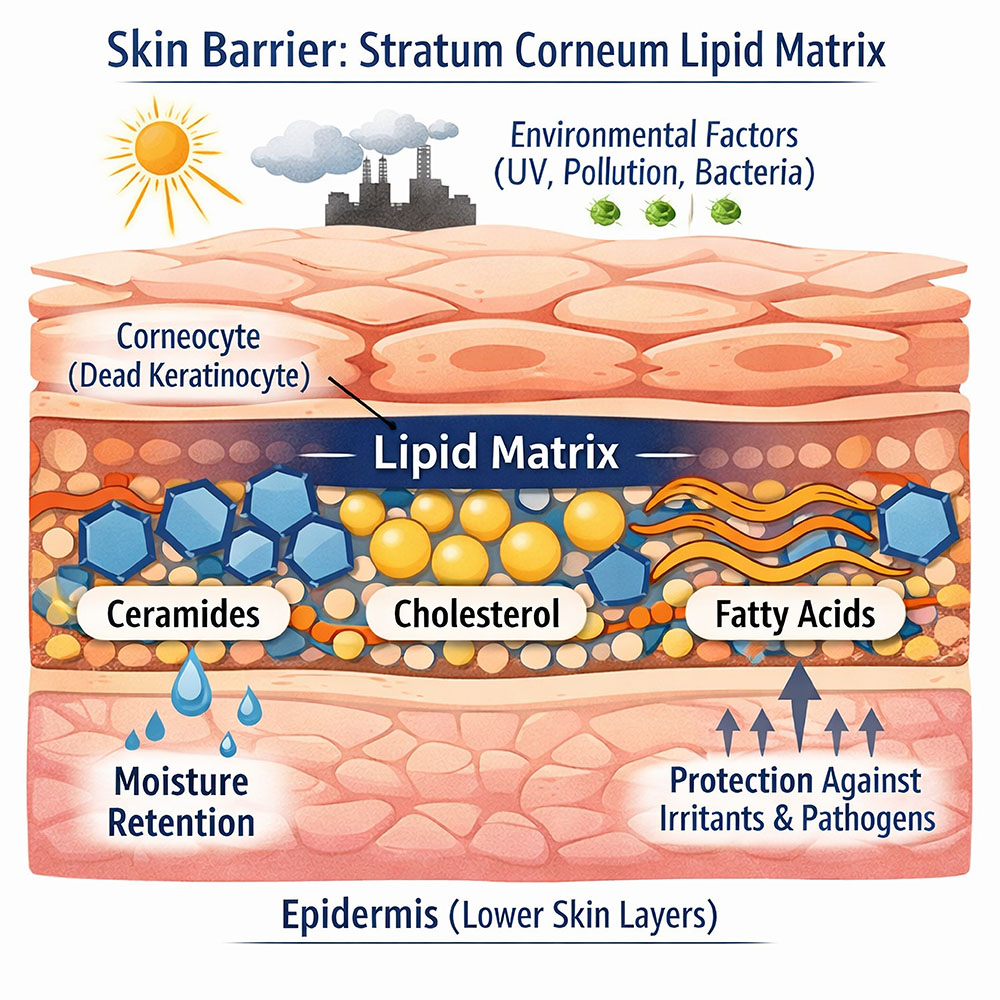
Conceptual representation of epidermal lipid matrix organization, barrier stability, environmental interaction, and biological equilibrium.
SECTION 03 · BIOLOGICAL SIGNALING

The Skin Does Not Respond to Acids
It Responds to Signals

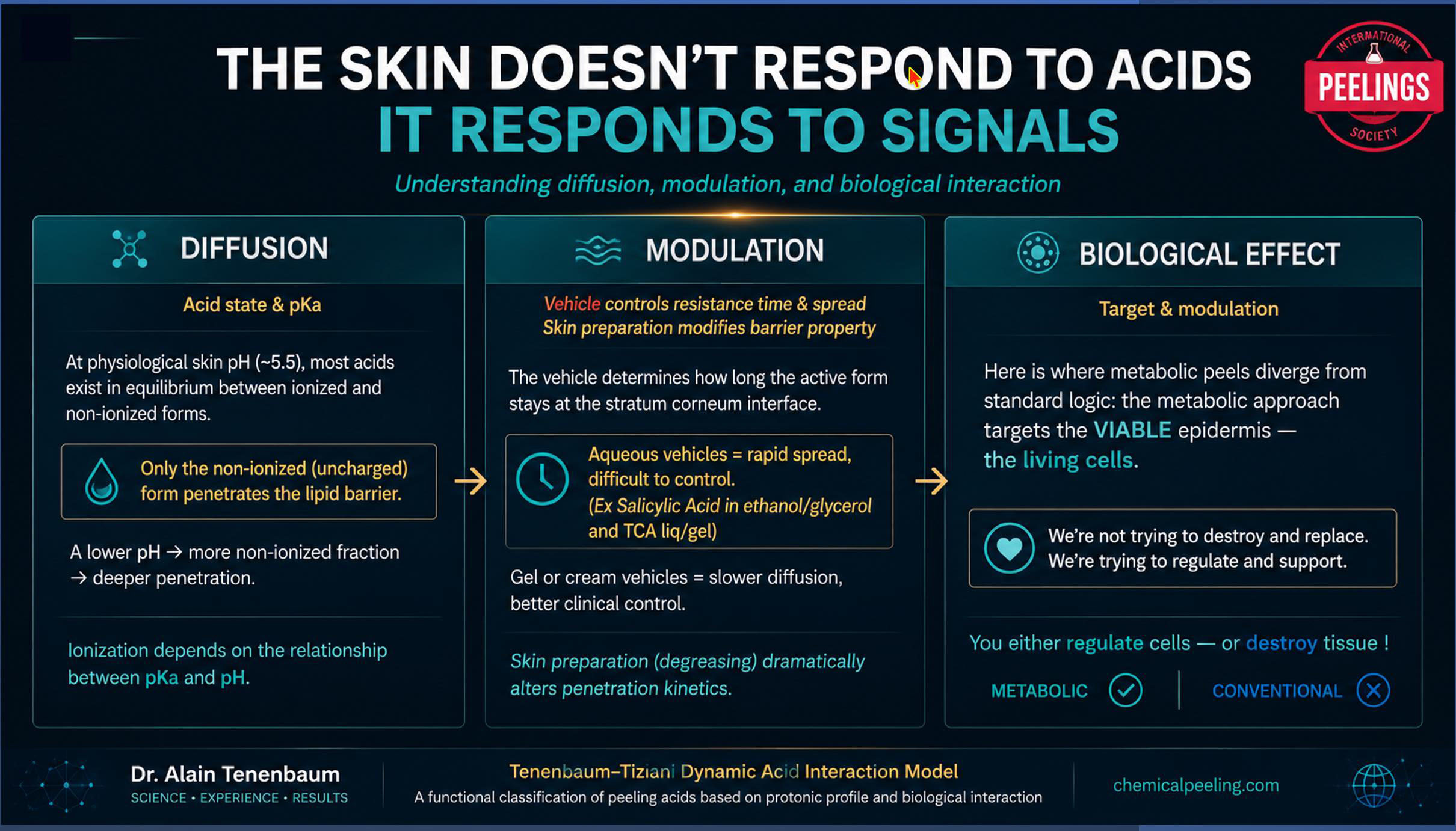
In metabolic peeling, acids are not interpreted as isolated chemical agents. Their biological relevance depends on the signals they generate inside the epidermal environment: stress perception, keratinocyte communication, inflammatory control, barrier response, and tissue adaptation.

The skin does not respond to acids, it responds to biological signals
Conceptual model showing that epidermal response is determined by biological signaling, not by acid presence alone.
01

Chemical Contact Is Only the Beginning

A peel formulation first creates a physicochemical interaction. The clinically relevant process begins when cells translate this interaction into biological signals.

02

Cells Interpret the Stimulus

Keratinocytes, barrier structures, and local inflammatory mediators determine whether the stimulus remains controlled or becomes excessive.

03

Metabolic Logic Means Signal Control

The objective is to influence renewal, adaptation, and recovery without forcing unnecessary biological instability.

SECTION 04 · BARRIER LIPID SCIENCE

Epidermal Barrier Lipids and
Lamellar Organization

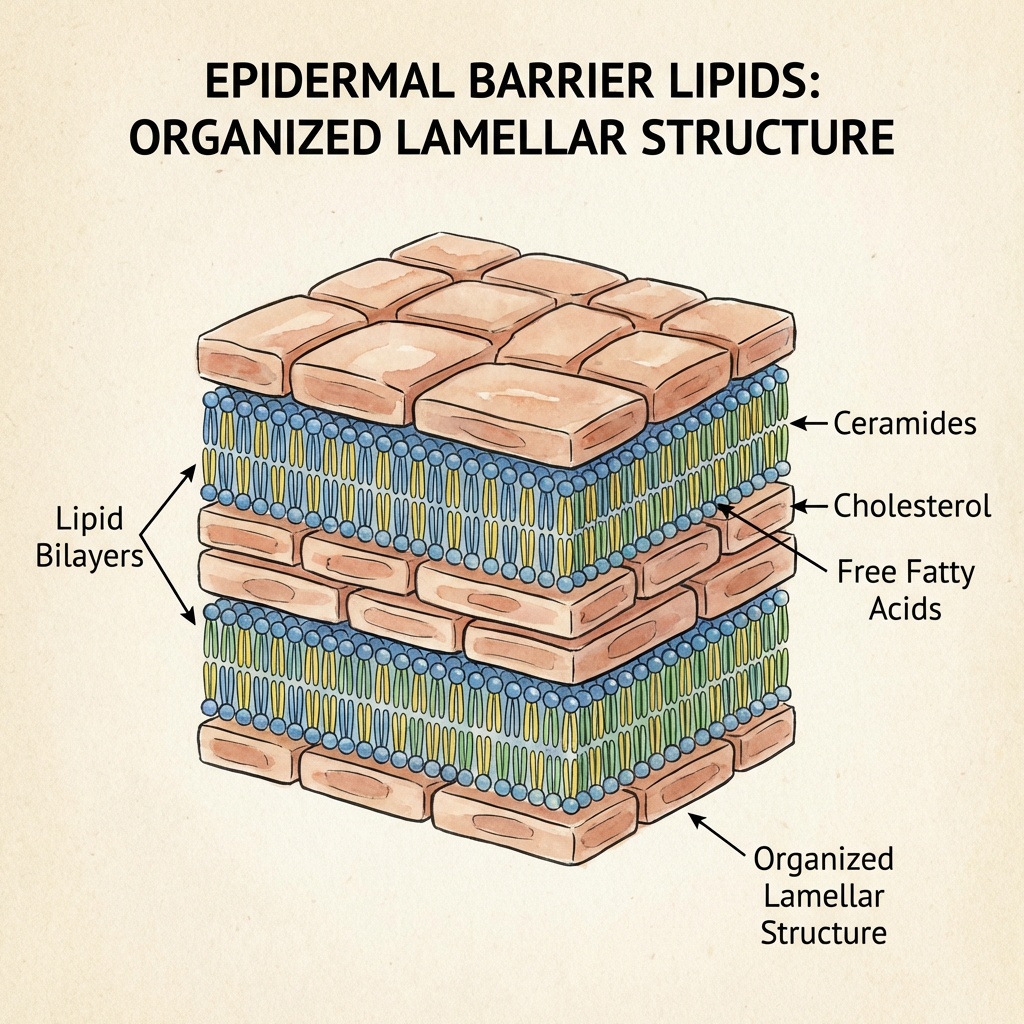
The stratum corneum is not a simple layer of dead cells. Its biological stability depends on a highly organized extracellular lipid matrix, where ceramides, cholesterol, and free fatty acids form structured lamellar layers essential for barrier competence.

In metabolic peeling, respect for this lipid organization is central. The objective is not uncontrolled barrier disruption, but controlled interaction with epidermal renewal while preserving the biological architecture required for hydration, defense, and recovery.

01 Ceramide Architecture

Ceramides contribute to the ordered lamellar structure that limits excessive water loss and supports barrier resilience.

02 Lipid Matrix Continuity

Lipid continuity between corneocytes helps maintain epidermal cohesion and functional resistance to external stress.

03 Barrier-Aware Modulation

Metabolic peel logic aims to influence tissue response without unnecessarily collapsing the lipid barrier system.

Epidermal barrier lipids and lamellar organization
Conceptual representation of ceramides, cholesterol, free fatty acids, and organized lamellar lipid structures within the epidermal barrier.
SECTION 05 · WATER BALANCE

TEWL, Water Retention and
Tissue Stability

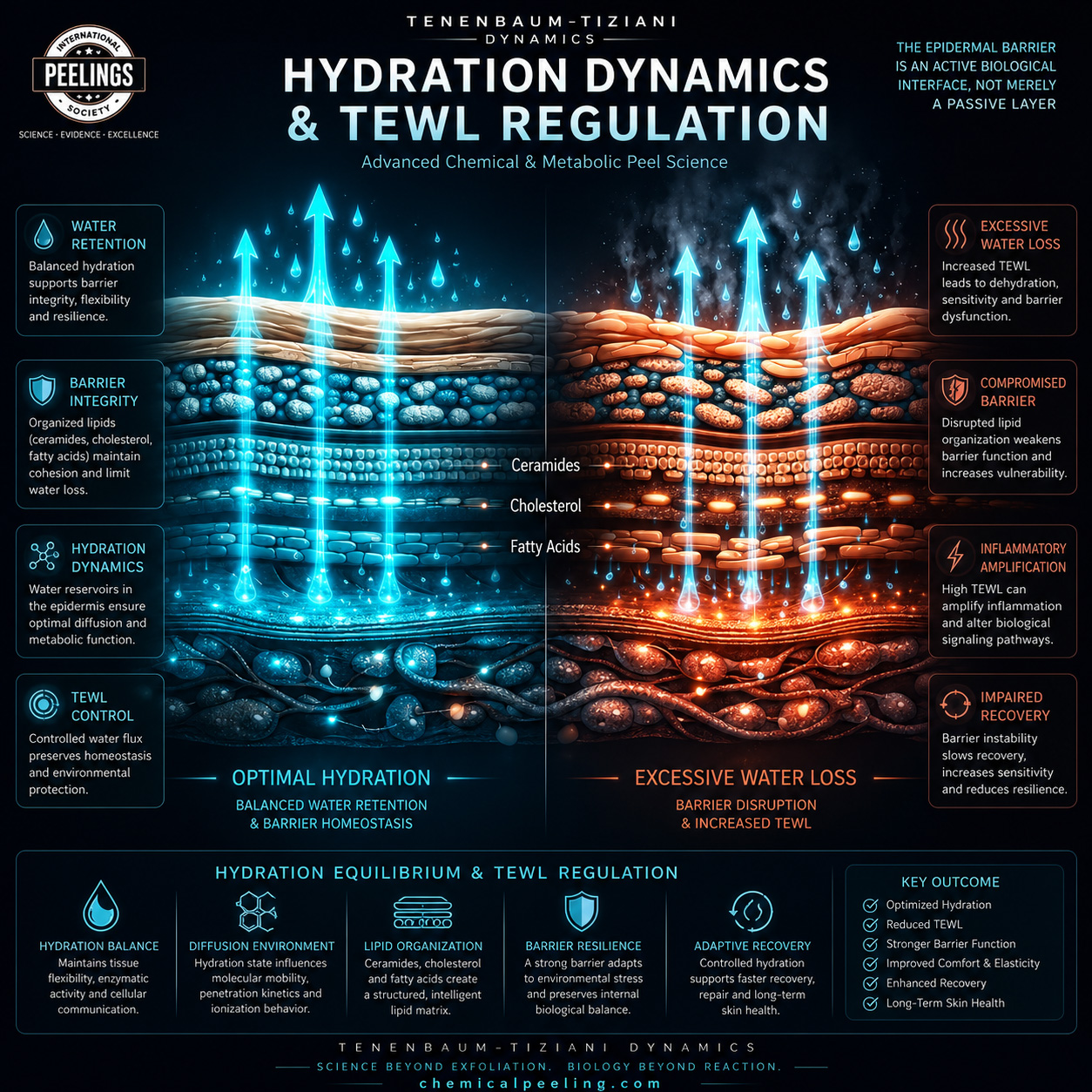
Transepidermal water loss, commonly abbreviated as TEWL, reflects the passive diffusion of water through the epidermis toward the external environment. When barrier organization is disturbed, TEWL increases and tissue stability may become progressively compromised.

In metabolic peel logic, water balance is not a cosmetic detail. It is a biological indicator of barrier competence, inflammatory control, recovery capacity, and epidermal functional resilience.

TEWL water retention and epidermal tissue stability
Conceptual representation of transepidermal water loss, epidermal hydration balance, and tissue stability after controlled skin intervention.
01

TEWL as a Barrier Indicator

Increased transepidermal water loss often reflects impaired lipid organization, reduced barrier cohesion, or excessive epidermal stress.

02

Water Retention Supports Recovery

Stable hydration helps maintain enzymatic activity, cellular comfort, barrier restoration, and controlled post-peel adaptation.

03

Metabolic Stability Requires Balance

Metabolic peel protocols should preserve biological equilibrium rather than creating unnecessary dehydration or prolonged barrier instability.

SECTION 06 · CONTROLLED BIOLOGICAL MODULATION

Controlled Modulation vs
Barrier Collapse

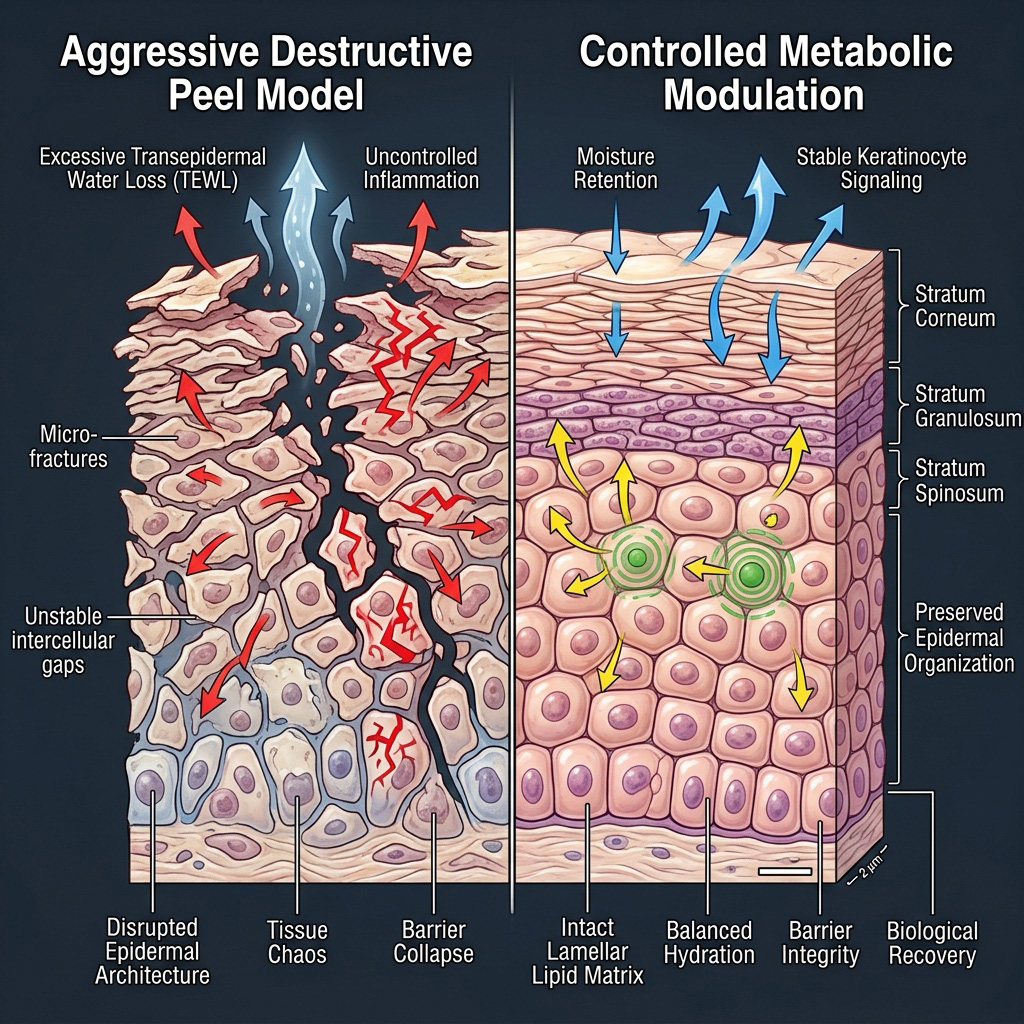
Traditional aggressive peeling models frequently prioritize visible destruction as a marker of efficacy. Excessive barrier disruption, uncontrolled inflammation, prolonged erythema, and delayed recovery may therefore become accepted collateral effects of treatment intensity.

Metabolic peel logic follows a different biological philosophy. The objective is to influence epidermal signaling, renewal dynamics, tissue adaptation, and functional recovery while minimizing unnecessary barrier destabilization.

Controlled modulation versus barrier collapse in metabolic peels
Conceptual comparison between biologically controlled epidermal modulation and excessive barrier destabilization after aggressive chemical intervention.
EXCESSIVE AGGRESSION
01

Barrier Destabilization

Excessive acid exposure may progressively impair lipid organization, hydration retention, and epidermal functional integrity.

02

Inflammatory Escalation

Uncontrolled tissue aggression may amplify inflammatory signaling and prolong recovery instability.

VS
METABOLIC CONTROL
01

Barrier-Aware Interaction

Metabolic approaches aim to influence biological behavior while preserving epidermal structural competence.

02

Progressive Tissue Adaptation

Controlled signaling allows renewal, modulation, and recovery without unnecessary biological collapse.

SECTION 07 · RECOVERY BIOLOGY

Controlled Inflammation and
Recovery Dynamics

Inflammation is not inherently pathological. Within controlled biological limits, inflammatory signaling participates in tissue renewal, epidermal adaptation, repair coordination, and recovery modulation.

The critical question is therefore not whether inflammation exists, but whether it remains biologically regulated or evolves toward excessive destabilization. Metabolic peel systems aim to preserve this regulatory balance while supporting progressive tissue recovery.

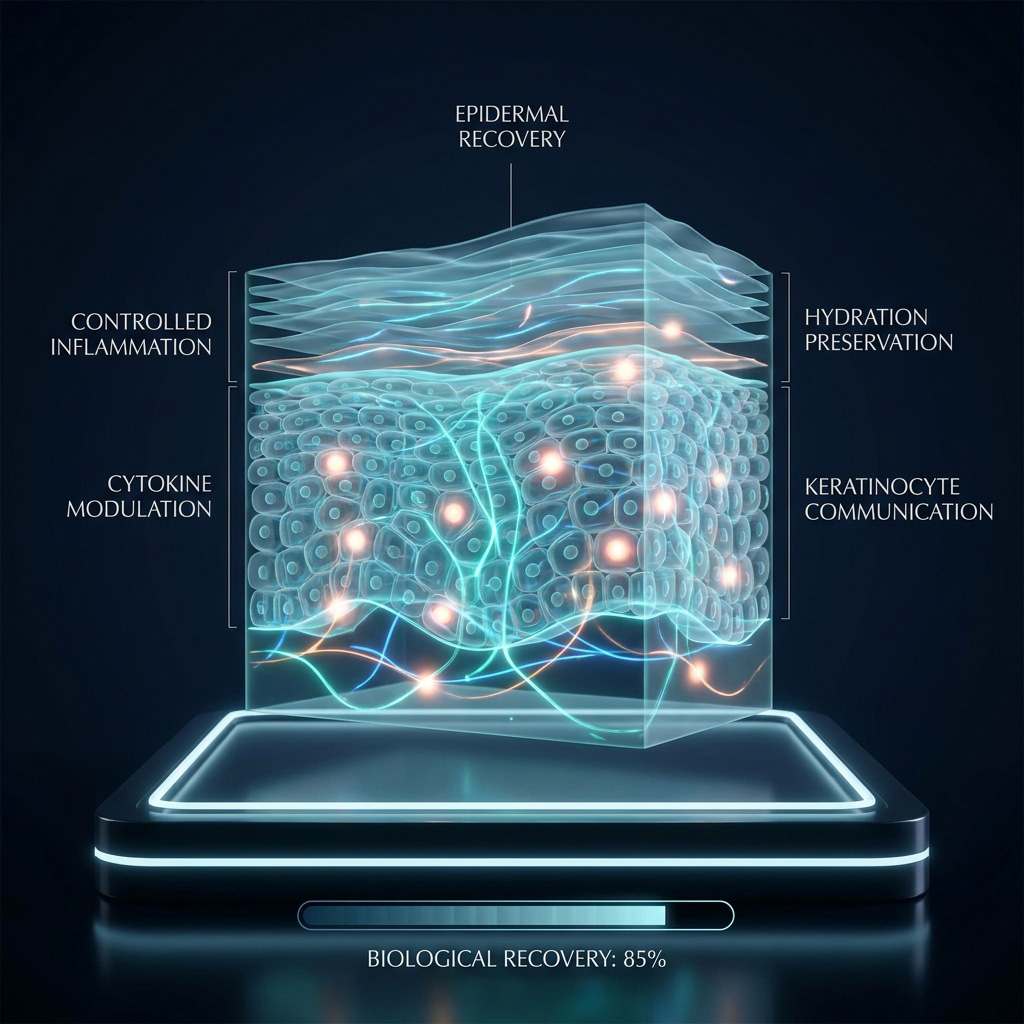
Controlled inflammation and epidermal recovery dynamics
Conceptual representation of biologically regulated inflammatory signaling, epidermal recovery coordination, and controlled tissue adaptation after metabolic skin intervention.
01

Inflammation as a Biological Signal

Controlled inflammatory mediators participate in renewal signaling, cellular adaptation, and coordinated epidermal recovery.

02

Recovery Requires Stability

Excessive tissue aggression may destabilize repair mechanisms, hydration balance, and epidermal functional coherence.

03

Metabolic Recovery Logic

Modern metabolic approaches aim to support progressive biological normalization rather than prolonged inflammatory collapse.

SECTION 08 · CELLULAR COMMUNICATION

KERATINOCYTE
COMMUNICATION
AND
EPIDERMAL
RENEWAL

Keratinocytes are not passive structural cells. They continuously exchange biochemical information through signaling pathways that regulate proliferation, differentiation, inflammatory balance, barrier adaptation, and epidermal renewal dynamics.

In metabolic peeling, clinical efficacy depends less on direct tissue destruction than on the controlled modulation of these cellular communication systems. The objective is to stimulate organized renewal while preserving biological coordination and epidermal integrity.

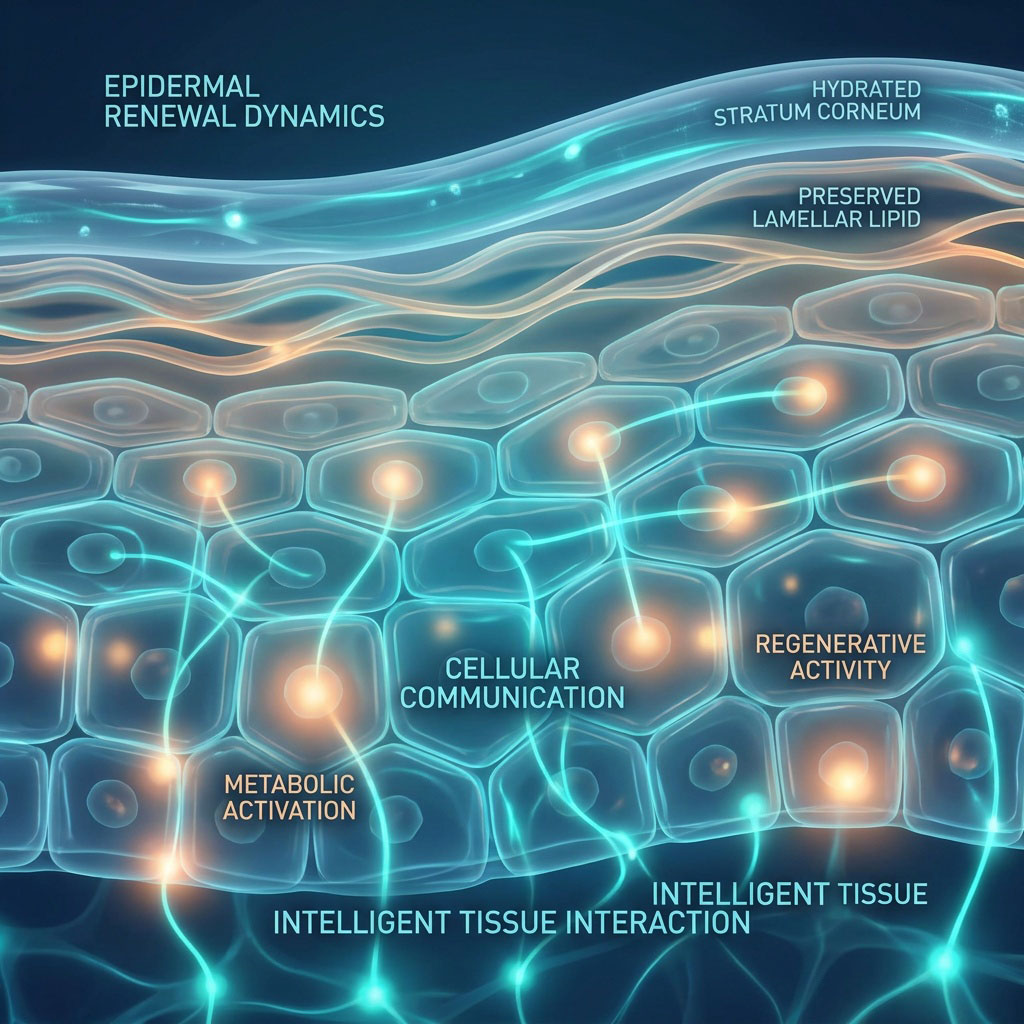
Keratinocyte communication and epidermal renewal dynamics
Conceptual representation of keratinocyte signaling, epidermal coordination, cellular communication pathways, and progressive biological renewal mechanisms.
01 Cellular Signaling

Keratinocytes exchange biochemical signals that regulate epidermal adaptation, inflammatory control, and tissue response.

02 Controlled Renewal

Metabolic approaches aim to stimulate progressive epidermal renewal without destabilizing the biological barrier system.

03 Barrier Coordination

Epidermal regeneration remains dependent on coordinated lipid, hydration, and cellular communication networks.

SECTION 09 · MODERN METABOLIC PROTOCOLS

BIOLOGICAL
MODULATION
IN MODERN
METABOLIC
PROTOCOLS

Modern metabolic peeling protocols are designed to influence epidermal behavior progressively rather than inducing abrupt tissue destabilization. The objective is not excessive exfoliation, but controlled biological modulation integrating barrier preservation, hydration stability, epidermal signaling, and recovery dynamics.

Clinical efficacy increasingly depends on protocol intelligence: progressive application logic, barrier-aware modulation, hydration support, lipid preservation, and post-intervention recovery coordination.

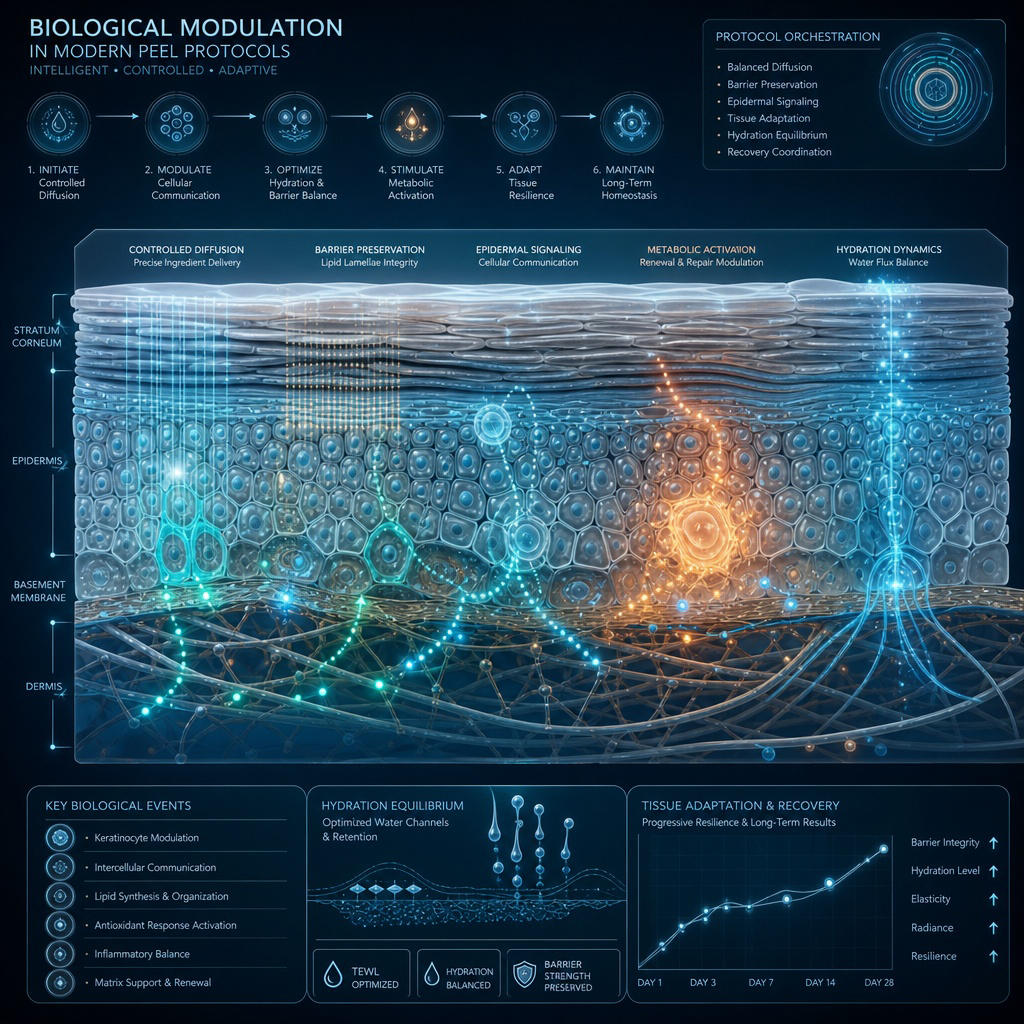
Biological modulation in modern metabolic peel protocols
Conceptual representation of progressive metabolic modulation, protocol-controlled epidermal interaction, barrier preservation, hydration regulation, and adaptive tissue recovery dynamics.
01 Progressive Interaction

Modern metabolic protocols aim to progressively influence epidermal behavior while preserving biological coherence and barrier functionality.

02 Barrier Preservation

Preservation of lamellar lipid organization and hydration balance helps maintain epidermal stability during controlled biological modulation.

03 Recovery Coordination

Controlled recovery dynamics depend on keratinocyte signaling, hydration equilibrium, lipid continuity, and tissue adaptation.

MINI FAQ · BIOLOGICAL MODULATION

Mini FAQ
Modern Metabolic Protocols

Metabolic peels aim to support progressive epidermal renewal while preserving cellular communication, hydration equilibrium, and barrier coordination. Their objective is not aggressive tissue destruction, but controlled biological modulation.

Barrier preservation helps maintain hydration dynamics, lipid organization, and tissue resilience. Controlled metabolic approaches seek to reduce unnecessary inflammatory overload while supporting recovery quality.

Products frequently associated with metabolic modulation strategies include KosmoPeel , Gradient Cream , and Peeling de Luxe Plus .

SECTION 11 · FINAL CLINICAL PERSPECTIVE

Toward Biological Precision
In Modern Peeling

Modern metabolic peel science progressively moves away from the idea that clinical efficacy must depend on aggressive surface injury. The central objective becomes controlled biological interaction, epidermal coordination, hydration stability, and recovery intelligence.

In this perspective, a peel is no longer understood only as a chemical exfoliating event, but as a biologically mediated intervention where barrier integrity, keratinocyte communication, inflammatory regulation, and tissue adaptation determine the quality of the clinical response.

Share this page with your network
cream2-eye-contour
pdl-plus
cream-felins
cream-gradient
cream2-microabrasive
cream-ormes-des-sioux
cream-papaya
cream-postpeel
cream-prepeel
cream-rose-du-desert
cream-stretchpeel
cream-peel-superstar
cream2-kosmopeel
cream2-lipoic-acid
cream2-eye-contour
pdl-plus
cream-felins
cream-gradient
cream2-microabrasive
cream-ormes-des-sioux
cream-papaya
cream-postpeel
cream-prepeel
cream-rose-du-desert
cream-stretchpeel
cream-peel-superstar
cream2-kosmopeel
cream2-lipoic-acid