
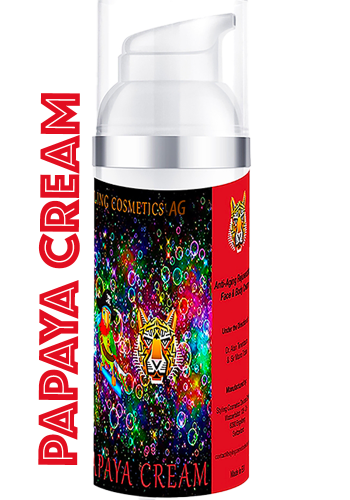
papaya cream

Papaya Cream

Papaya Cream is a refined professional enzymatic formulation created to promote gentle, metabolically driven surface renewal. Infused with papaya-derived enzymatic activity, it delicately refines texture and enhances visible luminosity while preserving optimal skin comfort—making it particularly suitable for sensitive or reactive skin profiles seeking radiance without aggressiveness.


Functional Classification & Clinical Positioning

Functional Classification

Metabolic, comfort-forward enzymatic resurfacing support for progressive surface refinement.

  • Enzymatic renewal (papaya-derived activity)
  • Non-aggressive, low-downtime positioning
  • Protocol-friendly (face + selected body zones)
  • Designed for sensitive / reactive profiles

“Refinement without harsh intervention.”

Primary Clinical Function

Surface Refinement

  • Smoother-looking texture
  • Less visible roughness
  • More polished skin feel

Radiance Support

  • Visible luminosity
  • Improves dull appearance
  • Uniform-looking complexion

Comfort-oriented resurfacing support within structured professional maintenance.

Clinical Approach

Protocol Logic

  • Progressive renewal (not “one-time peel events”)
  • Comfort-first for sensitive/reactive profiles
  • Strict daily photoprotection during renewal phases

Practical Use

  • Start low frequency (2–3 nights/week), then adjust
  • Reduce if stinging/erythema/dryness appears
  • Avoid irritated or freshly treated skin

Individualize by tolerance, zone, and season.

Understanding its enzymatic renewal profile clarifies why Papaya Cream is positioned differently from classic acidic resurfacing systems.

Mechanism of Action

Enzymatic Renewal (Papaya-derived activity)

  • Supports gentle surface refinement
  • Comfort-forward strategy for sensitive/reactive profiles
  • Designed for progressive, protocol-friendly maintenance

High-Intensity Acidic Resurfacing
( Classic Approach)

  • May be more aggressive and less comfortable
  • Often associated with higher irritation potential
  • Not always suitable for reactive skin profiles

Papaya Cream is positioned for refined results through gentle, metabolically guided surface renewal—without harsh intervention.

Specific Indications

  • Dull, tired-looking complexion
  • Loss of visible luminosity
  • Uneven surface texture
  • Rough / congested stratum corneum
  • Urban / pollution-exposed skin
  • Smoker’s skin appearance
  • Maintenance after corrective procedures
  • Patients seeking gentle renewal

Aesthetic Positioning

Designed to enhance visible radiance and refinement without harsh intervention.

Adapt frequency and schedule to tolerance and seasonal conditions.

Clinical Highlights

  • Glycolic-centered resurfacing to support smoother texture and visible radiance.
  • Gradual, protocol-friendly approach—designed for progressive results rather than aggressive peeling.
  • Face + body versatility for patients needing ongoing “polish” maintenance.
  • Comfort-forward positioning (supportive regimen and spacing can be adjusted clinically).

Product Scope: What Papaya Cream Is / What It Is Not

What Papaya Cream Is

  • A physician-dispensed glycolic-based resurfacing cream for progressive renewal.
  • A maintenance tool to support radiance, smoother-looking skin, and refined texture.
  • A flexible protocol component (frequency can be tailored clinically).

What It Is Not

  • Not an aggressive “peel event” intended to force visible shedding.
  • Not a substitute for in-clinic resurfacing when deeper correction is indicated.
  • Not designed for use on irritated, compromised, or freshly treated skin unless cleared clinically.

Clinical Parameters

Formulation Type

Cream-based formulation

Topographic Categories

Face , Body , Neck, Décolleté, Periocular, Hands

Phototypes

Downtime

None

Desquamation Profile

Soft desquamation

Why the 50 g Format matters

Rationale for the 50 g Professional Format

A 50 g format supports consistent protocol adherence over several weeks and makes it easier to extend use beyond the face to additional target zones (neck, décolleté, hands, and selected body areas). This is particularly relevant for maintenance strategies where gradual results and continuity matter.

Key Active Ingredients

Glycolic Acid

Supports progressive resurfacing and smoother texture, helping improve the appearance of dullness and roughness.

Citric Acid

Complements renewal pathways and supports overall clarity in multi-acid cosmetic-style formulations.


Ingredient lists may vary by batch and market labeling requirements. Always refer to the product packaging for the most current INCI.

Why Papaya Cream Is a Core Maintenance Tool

  • Continuity: supports long-term texture and radiance goals between stronger interventions.
  • Scalability: suitable for face-only use or expanded to multiple zones when indicated.
  • Protocol logic: pairs naturally with barrier-support and post-care routines.
  • Patient adherence: gradual approach often improves compliance vs. harsh “all-at-once” peeling.

Specific Benefits (Visible Effects)

  • Smoother-looking texture
  • More even-looking tone
  • Improved “radiance” appearance
  • Supports a cleaner skin surface feel
  • Helps reduce the look of dullness
  • Maintenance-friendly, low downtime profile

Results depend on baseline skin condition, frequency, and the complete regimen.

Combinations with Other Products

Before – Skin Preparation

Before – Skin Preparation

Proper preparation enhances tolerance and optimizes enzymatic surface activity.

  • Pre-Peel – prepares the surface and improves protocol consistency.
  • Aseptiskin – supports optimal cleansing before renewal phases.

After – Post-Procedure / Maintenance

Advanced Combination – Progressive Intensification

For patients seeking enhanced resurfacing within a structured professional protocol.

Adjust frequency and layering according to tolerance and phototype.

Alternate – Synergy & Comfort Modulation

Alternate & Maintenance Strategy

Papaya Cream can be alternated to maintain radiance once primary correction goals are achieved.

Ideal for patients transitioning from correction to structured maintenance.

Role Within Maintenance Strategies

Papaya Cream is positioned as a long-term “texture & radiance maintenance” tool. It is especially useful after correction phases, when the clinical priority becomes stability, continuity, and adherence rather than aggressive resurfacing.

  • Use frequency can be spaced (e.g., 2–3 nights/week) once goals are achieved.
  • Pairs well with barrier support and strict photoprotection.
  • Body zones can be included when clinically appropriate.

Usage Context

Professional, Physician-Dispensed

Papaya Cream is positioned as a professional home-care maintenance tool, dispensed through qualified clinical channels. Protocol frequency, layering, and target zones should be individualized by the practitioner based on tolerance, zone, and season.

  • Start progressively and adjust according to comfort.
  • Pair with strict daily photoprotection during renewal phases.
  • Expand to additional zones only when clinically appropriate.

Practical Notes & Precautions

  • Avoid use on irritated, compromised, or freshly treated skin unless cleared clinically.
  • Reduce frequency immediately if stinging, erythema, or excessive dryness appears.
  • Avoid proximity to eyes, mucosa, and intimate areas.
  • Stop temporarily before and after intensive in-clinic resurfacing, as advised.

This product is designed for aesthetic surface refinement. Suitability and scheduling should be determined by the practitioner.

FAQ

Click a question to expand the answer.

  • Is Papaya Cream suitable for sensitive or reactive skin?

    It is positioned as a comfort-forward enzymatic renewal option. Start progressively and reduce frequency immediately if irritation occurs.

    • Begin low-frequency (commonly 2–3 nights/week)
    • Adapt by zone, season, and tolerance
  • How fast can I expect visible results?

    Most patients notice progressive refinement with consistent use. Visible changes depend on baseline texture, frequency, and the complete regimen.

  • How often should it be used?

    Use a progressive schedule. Maintenance spacing is typically used once goals are achieved.

    • Start: 2–3 nights/week
    • Adjust: increase or decrease based on comfort
    • Maintain: space out once stable
  • Can it be combined with other products or protocols?

    Yes—within a structured regimen. Preparation, intensification phases, and comfort support should be guided professionally.

    • Preparation: Pre-Peel (when indicated)
    • Comfort support: Post-Peel (as needed)
    • Maintenance: alternate with a balanced care product
  • Where should it not be applied?

    Avoid proximity to eyes, mucosa, and intimate areas. Do not apply on irritated or compromised skin unless cleared clinically.

  • Do I need a protective step during this regimen?

    Yes—any renewal-oriented routine benefits from a dedicated protective strategy. Within our professional protocols, the recommended choice is Stretchpeel , used as directed by the practitioner.

Buy Papaya Cream

Proceed to purchase through our professional channel. If you are unsure about suitability or frequency, book a teleconsultation.

swiss-made
top-quality

Share this website on your social medias
cream2-eye-contour
pdl-plus
cream-felins
cream-gradient
cream2-microabrasive
cream-ormes-des-sioux
cream-papaya
cream-postpeel
cream-prepeel
cream-rose-du-desert
cream-stretchpeel
cream-peel-superstar
cream2-kosmopeel
cream2-lipoic-acid
cream2-eye-contour
pdl-plus
cream-felins
cream-gradient
cream2-microabrasive
cream-ormes-des-sioux
cream-papaya
cream-postpeel
cream-prepeel
cream-rose-du-desert
cream-stretchpeel
cream-peel-superstar
cream2-kosmopeel
cream2-lipoic-acid