Scientific Hub

The Science of Chemical Peels

Chemical peeling is not a single superficial gesture, but a controlled biological intervention in which chemistry, tissue response, indication logic, and depth interpretation interact dynamically.
This page is the integrated Science Hub of the platform. It brings together your scientific introduction, the functional depth model, the metabolic peel paradigm, and comparative interpretative articles into one coherent knowledge architecture organized as Core Science, Applied Science, and Comparative Science.
Conceptual illustration of functional depth and tissue response in chemical peeling
Functional depth and tissue response
conceptual illustration
Conceptual illustration of chemical peel dynamics highlighting the interaction between functional depth, tissue response, and controlled biological mechanisms in aesthetic skin treatment.
Conceptual Figure

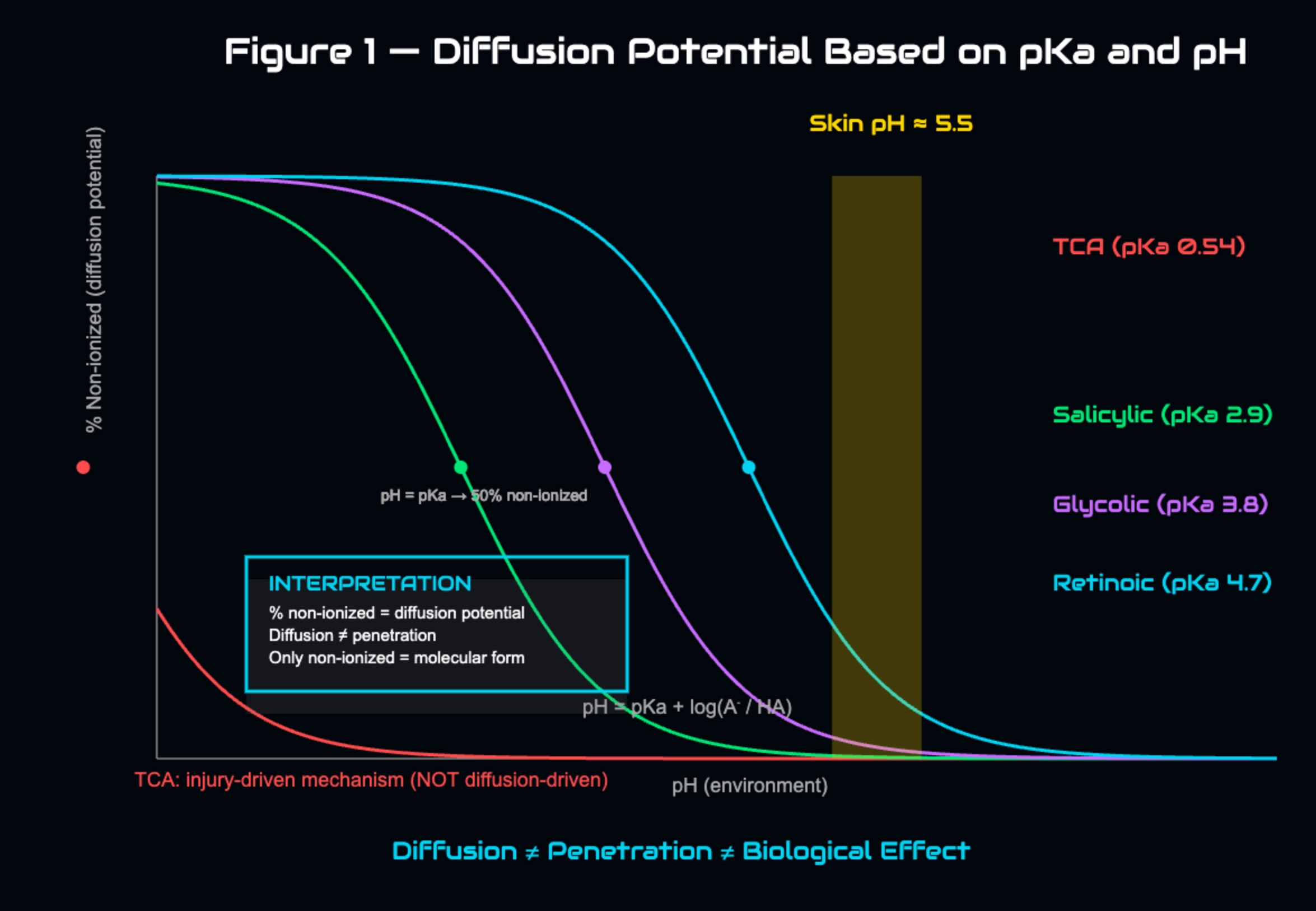
Figure 1 — Acid Diffusion, pKa, and Functional Chemical Activity

This figure introduces a foundational scientific principle of chemical peeling: diffusion alone does not define clinical effect. Functional activity depends on pKa-related dissociation, chemical behavior in tissue, and the biological context in which the agent is applied.

Why this figure matters

In professional chemical peeling, the visible movement of an acid through tissue should not be confused with its full clinical significance. A molecule may diffuse, but its effective biological action depends on the relationship between acidity, dissociation, vehicle, tissue environment, and functional cellular response.

This figure helps frame the scientific logic of the page: chemical peeling is not merely about surface damage or visible desquamation, but about controlled functional interaction between chemistry and skin biology.

  • Diffusion is not identical to biologically meaningful action
  • pKa influences dissociation and therefore functional chemical availability
  • Tissue response depends on more than concentration alone
  • Clinical interpretation must integrate chemistry, function, and indication
Scientific significance. This model helps explain why chemical peels cannot be reduced to crude depth labels. The relevant question is not only how far an agent moves, but how it behaves functionally within living tissue.
Figure 1
Figure 1 showing the relationship between acid diffusion, pKa, and functional chemical activity in professional chemical peeling
Conceptual model illustrating that acid diffusion and functional chemical activity are not equivalent. In chemical peeling, effective biological action must be interpreted through dissociation behavior, tissue context, and functional response rather than spatial movement alone.
Foundational Layer

Core Science

Core Science establishes the conceptual and biological basis of the platform. It explains the science of peeling, clarifies mechanisms of action, presents the functional depth model, and broadens the discussion toward biological photoprotection in aesthetic medicine.

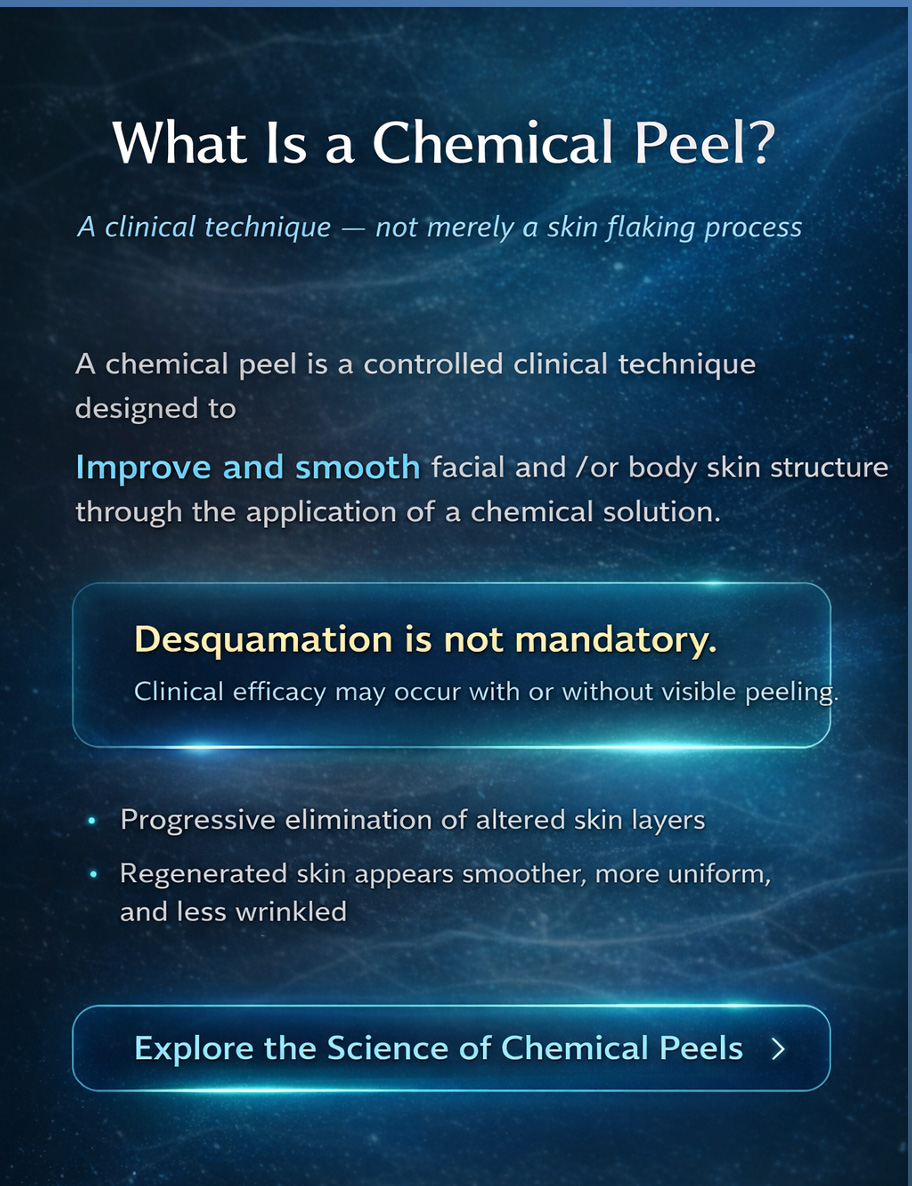
What Is a Chemical Peel?

A chemical peel should not be reduced to the simplistic idea of surface exfoliation. It is a targeted intervention in which a given chemical agent, placed under specific clinical conditions, initiates a biological response that depends on concentration, vehicle, tissue context, indication, and functional tissue behavior.

  • Selective or progressive renewal of altered layers
  • Controlled biological stimulation rather than crude destruction
  • Clinical meaning depends on tissue response and indication
  • Depth alone is insufficient when function is ignored
Core science premium
Chemistry initiates the event The peel starts with chemistry, but chemistry alone does not explain its full clinical significance.
Biology defines the response Tissue behavior, resilience, inflammation, repair, and regeneration modulate outcomes.
Function matters more than labels Static depth labels remain incomplete when detached from biological and clinical context.
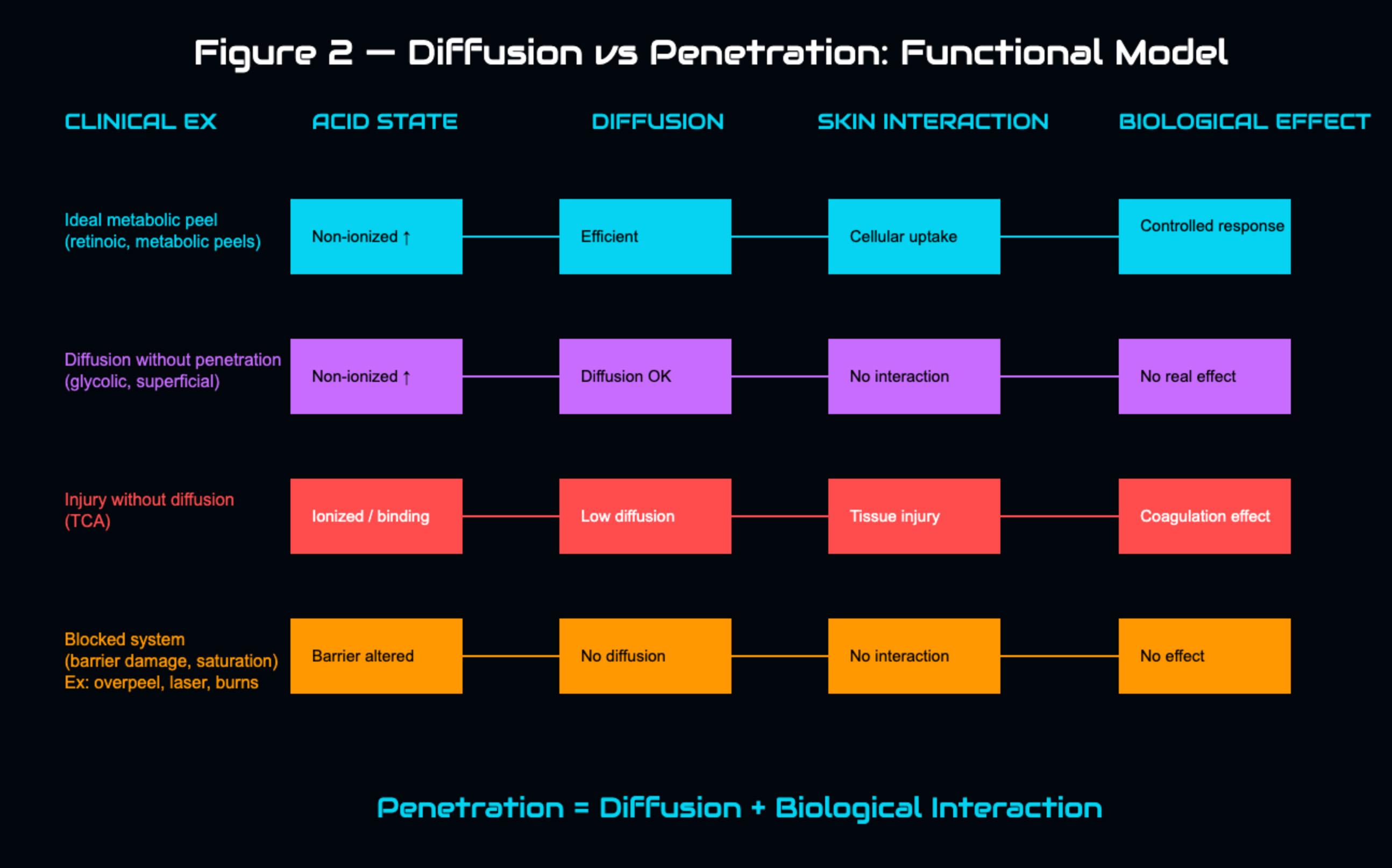
F2

Diffusion, Penetration, and Functional Interaction

Diffusion versus penetration and functional tissue interaction

This model clarifies a major misconception in chemical peeling: deeper penetration does not necessarily result in greater efficacy. Clinical outcomes depend on how chemical agents interact functionally with tissue.

Diffusion Penetration Functional interaction
Clinical insight. The key parameter is not how far an acid travels, but how it behaves within living tissue.
01

The Science of Chemical Peels

The main scientific entry page defining the conceptual field, introducing the interaction between chemistry and biological response, and framing peeling as a structured medical-aesthetic intervention.

Entry point Scientific overview Foundational article
Read article →
02

Mechanisms of Action of Chemical Peels

A more detailed reading of keratoregulation, epidermal turnover, signaling cascades, controlled stimulation and the tissue logic that underlies visible clinical outcomes.

Biological mechanisms Mode of action Tissue response
Read article →
03

The Functional Depth Model

A signature interpretative model proposing that peel depth must be understood in relation to function, chemistry, indication, and biological consequence rather than morphology alone.

Depth logic Functional model Conceptual framework
Read article →
04

Biological Photoprotection in Aesthetic Medicine

A broader interpretation of photoprotection focused on tissue defense, metabolic support, biological resilience, and the limits of purely simplified SPF-centered narratives.

Photobiology Biological support Aesthetic medicine
Read article →
Core Insight. A serious scientific reading of chemical peeling cannot stop at labels such as “superficial,” “medium,” or “deep.” Interpretation becomes meaningful only when chemistry, tissue response, vehicle, indication, and functional biological consequences are considered together.
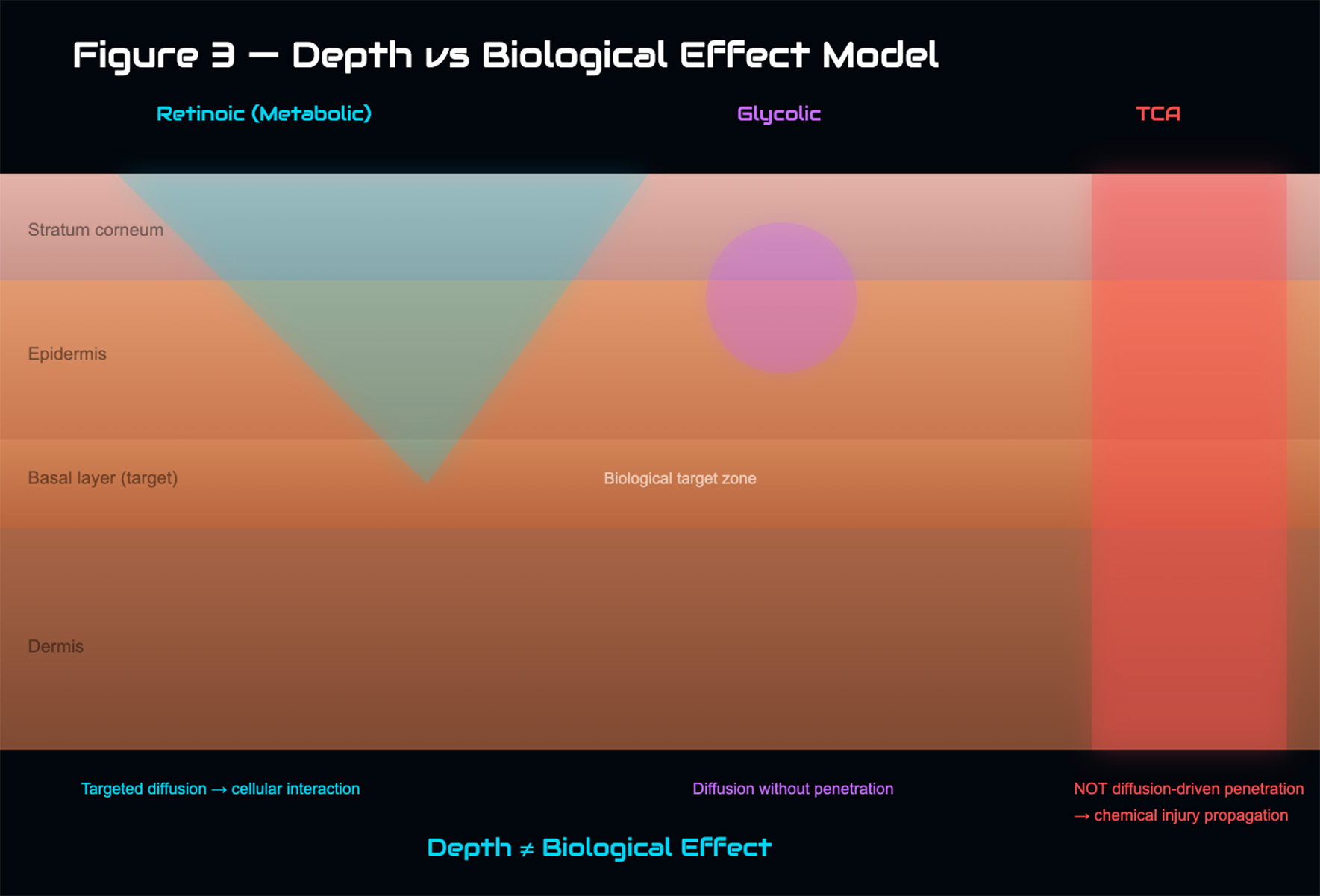
Figure 3
Functional depth and biological effect model in chemical peeling
Conceptual model illustrating that functional depth should be interpreted through biological effect rather than by a purely geometric or morphological notion of penetration.
Transition Figure

Figure 3 — Functional Depth and Biological Effect Model

This figure represents a key conceptual transition in the scientific architecture of the page. It shows that treatment significance is not determined only by how far a substance seems to go, but by the nature and quality of the biological effect produced at tissue level.

In other words, functional depth is not merely a spatial parameter. It reflects the relationship between chemical behavior, tissue susceptibility, regenerative potential, and the clinically meaningful response triggered by the peel.

Functional Depth A depth concept defined by biological relevance rather than by visible or presumed penetration alone.
Biological Effect The true treatment outcome depends on cellular response, signaling activity, tissue modulation, and regenerative consequence.
Clinical Value This model helps explain why two apparently similar peels may produce very different functional and therapeutic outcomes.
Strategic significance. Figure 3 acts as the conceptual bridge between foundational science and clinical application. It prepares the transition from Core Science to Applied Science by redefining depth in terms of biological effect.
Translational Layer

Applied Science

Applied Science translates theoretical knowledge into structured clinical reasoning. It connects the functional depth model with treatment logic and gives a central place to the metabolic peel paradigm as a distinct scientific and technical proposition.
Applied science premium

Metabolic Versus Purely Destructive Thinking

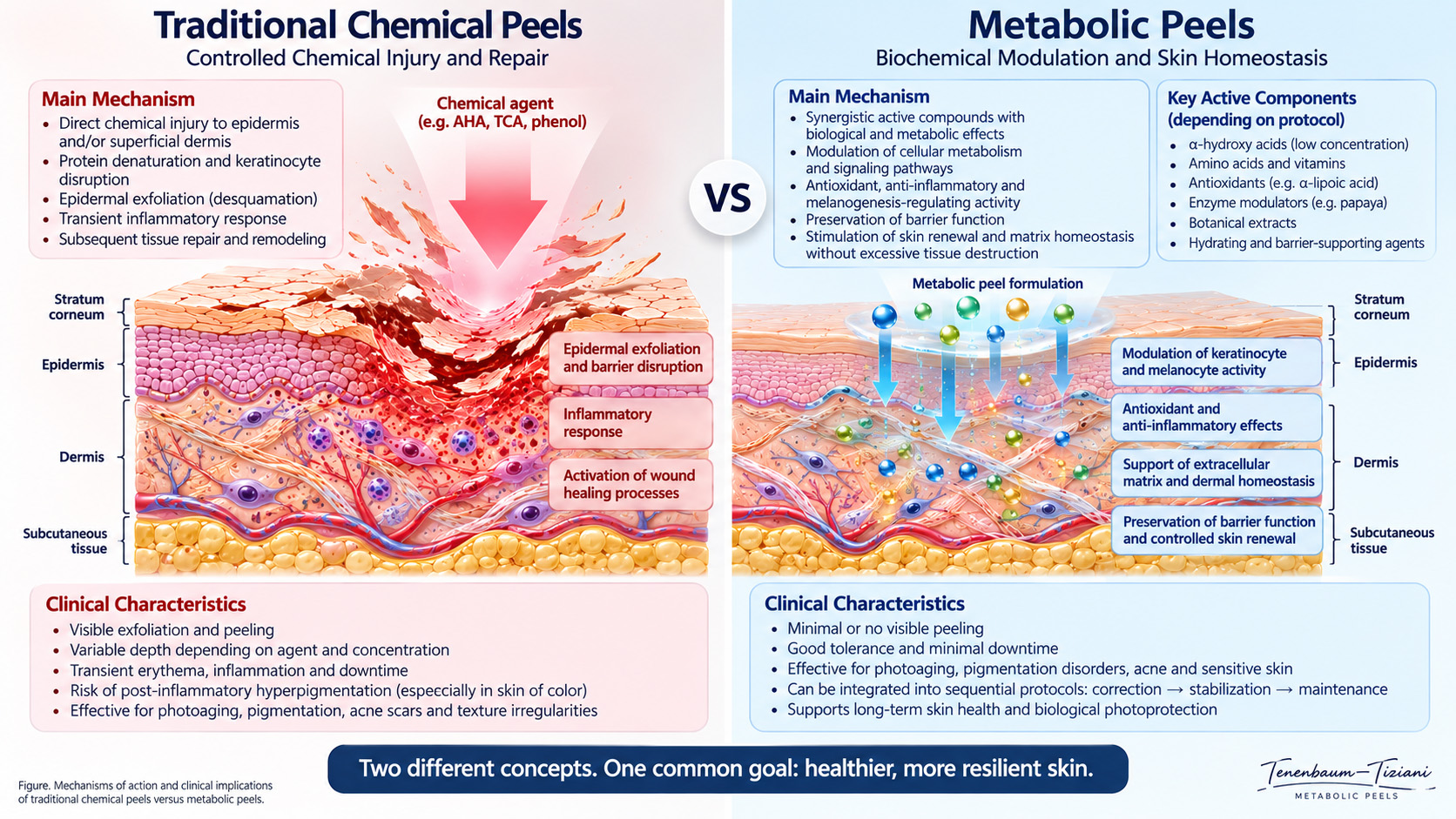
One of the main differentiators of this platform is the idea that some peel approaches must be read not merely as caustic events, but as controlled biochemical and metabolic interventions that orient renewal, function, and tissue quality more precisely.

  • Technique remains inseparable from biological purpose
  • Functional depth refines interpretation beyond visible frosting
  • Metabolic logic supports more nuanced treatment reasoning
  • Applied science bridges concept and protocol design
Mechanistic Table
Basal Layer Targeting in Metabolic Peels
This table summarizes the conceptual interpretation of metabolic peels as functionally oriented interventions interacting with biologically decisive layers such as the stratum basale.
Conceptual Visual
Metabolic peels and basal layer targeting mechanism in professional chemical peeling
Conceptual model illustrating that certain metabolic peels may derive part of their relevance from functional interaction with biologically decisive layers such as the stratum basale rather than from superficial destruction alone.
Target Layer
Stratum basale as a biologically strategic interface for regeneration, melanocytic regulation, and epidermal renewal.
Primary Mechanism
Functional biochemical interaction rather than superficial destructive exfoliation.
Biological Effect
Modulation of cellular activity, signaling pathways, and regenerative dynamics.
Clinical Interpretation
Results may occur without aggressive visible damage, challenging classical depth-based expectations.
Strategic Value
Supports a metabolic and functional approach to peeling rather than a purely destructive paradigm.
Interpretative insight. This table reinforces the idea that effective peeling strategies may rely on targeted biological interaction rather than visible surface aggression alone.
05

Metabolic Peels: Core Technique

The central technical page of the metabolic peel concept. It explains the rationale, identity, and scientific logic of a technique positioned beyond ordinary exfoliative reductionism.

Technique pillar Metabolic concept Advanced science
Read article →
06

Clinical Applications of the Functional Depth Model

This page links theory to practice by showing how the functional depth model can orient indication analysis, strategic product selection, and more precise protocol interpretation.

Clinical reasoning Applied framework Decision support
Read article →
Applied Insight. A scientific model becomes truly useful when it helps structure clinical decisions. Applied Science is the bridge that connects the intellectual architecture of the site to protocols, products, and indication-specific strategy.
Decision Figure

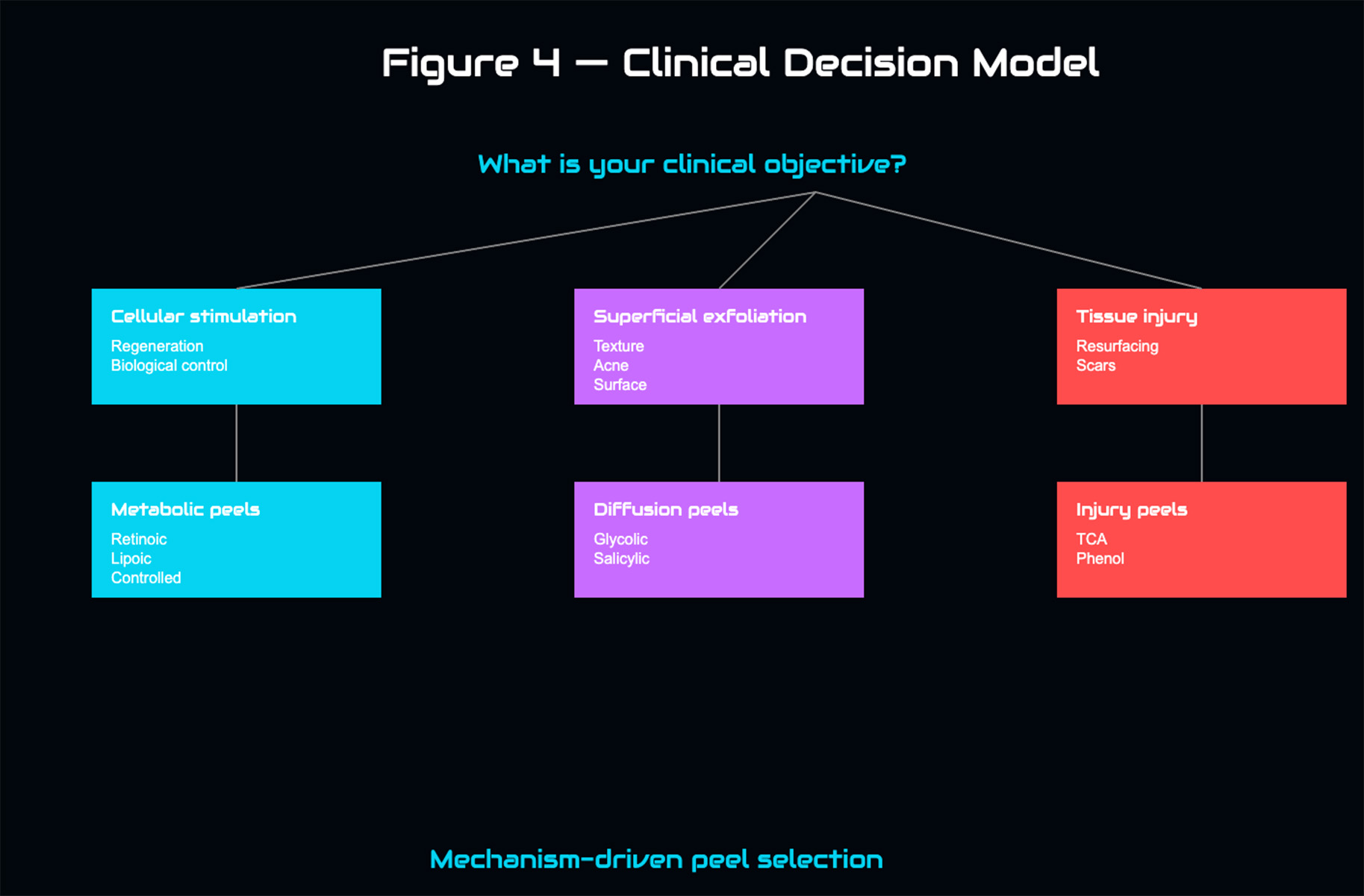
Figure 4 — Mechanism-Driven Peel Selection Model

This model proposes that peel selection should not be based on habit, brand familiarity, or simplistic depth categories alone. The relevant question is which biological mechanism is most appropriate for the indication, tissue context, and desired therapeutic effect.

In this perspective, treatment choice becomes mechanism-driven: one selects the peel according to the dominant functional objective rather than by relying on generic or static classifications.

01
Define the Indication Clarify whether the dominant problem is dyschromia, texture, inflammation, photoaging, keratotic alteration, or another functional tissue issue.
02
Identify the Target Mechanism Determine whether the treatment goal requires keratolysis, signaling modulation, metabolic support, selective correction, controlled stimulation, or another biological pathway.
03
Select the Appropriate Peel Logic Choose the peeling strategy whose mechanism best matches the intended functional effect rather than defaulting to conventional strength-based reasoning.
Strategic implication. Figure 4 completes the transition from science to clinical reasoning. It shows that the most intelligent peel choice is not the strongest option, but the one whose mechanism best fits the biological objective.
Figure 4
Mechanism-driven peel selection model in professional chemical peeling
Conceptual selection model showing that peel choice should be guided by mechanism, indication, and biological objective rather than by habit or simplified notions of strength and depth alone.
Analytical Layer

Comparative Science

Comparative Science clarifies distinctions that are too often flattened by conventional classifications. These pages refine scientific interpretation, acid selection logic, and strategic understanding of treatment behavior.

Why Comparative Interpretation Matters

Comparative reading is essential because similar labels may hide profoundly different chemical behaviors and clinical consequences. Acid family, vehicle, formulation, indication, and tissue context all influence outcomes more than simplified typologies suggest.

  • “Superficial / medium / deep” remains insufficient alone
  • AHA and BHA cannot be reduced to simple marketing families
  • TCA and salicylic acid differ in logic, context, and outcome profile
  • Comparative science sharpens therapeutic reasoning
Comparative science premium
07

Comparative Interpretation of Depth Classifications

A comparative reading of major depth classification systems, with emphasis on their limits when function, chemistry, and indication-related variability are taken into account.

Classification systems Depth analysis Comparative review
Read article →
08

AHA vs BHA

A comparative analysis of hydroxy-acid families focused on behavior, indication relevance, penetration tendencies, and the practical scientific consequences of their differences.

Acid families Comparative chemistry Clinical relevance
Read article →
09

TCA vs Salicylic Acid

A clinically meaningful comparison centered on functional outcomes, dyschromic logic, acid behavior, and indication-specific differences relevant to advanced peeling strategy.

Comparative table Acid behavior Hyperpigmentation logic
Read article →
Comparative Insight. The purpose of comparison is not academic ornament. It is to avoid false equivalences, oversimplified categories, and clinically weak treatment logic.

Scientific Overview

This integrated Science Hub organizes the scientific architecture of chemical peeling into three complementary layers.
Core Science
Defines the conceptual foundation through the science of peeling, mechanisms of action, the functional depth model, and biological photoprotection.
Applied Science
Translates this knowledge into structured clinical reasoning, particularly through the metabolic peel paradigm and the practical applications of functional depth logic.
Comparative Science
Refines interpretation by comparing classifications, acid families, and strategically different agents such as TCA and salicylic acid.
Together, these sections create a coherent scientific ecosystem intended for physicians and qualified aesthetic practitioners seeking deeper understanding beyond superficial commercial descriptions.

Key Scientific Questions

What defines the scientific basis of a chemical peel?

A chemical peel is defined by the interaction between the chemical agent, the biological response of the skin, and the functional depth achieved.

Is visible peeling necessary for clinical efficacy?

No. Effective biological stimulation can occur without visible desquamation. Clinical outcomes depend on controlled cellular activation.

What is the functional depth model?

It defines treatment impact based on biological response rather than traditional superficial, medium, or deep classifications.

How do metabolic peels differ from traditional peels?

Metabolic peels regulate cellular function instead of inducing controlled destruction of skin layers.

Why compare different acids such as TCA and salicylic acid?

Different agents produce distinct biological responses, requiring precise selection based on indication and desired outcome.

Move from Science to Clinical Practice

Access structured protocols, targeted indications, and professional formulations to translate scientific understanding into precise clinical outcomes.

Share this website on your social medias