Salicylic Acid
Professional Product

Salicylic Acid

Liquid or Gel

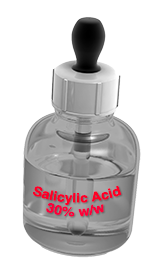
Salicylic Acid is a lipophilic beta-hydroxy acid designed for controlled superficial exfoliation and pore-level skin clarification. Its affinity for sebum-rich areas allows targeted action on surface irregularities and congested pores, while maintaining a predictable and professional clinical profile.

Specific Indications

  • Hyperpigmentation resistant to TCA
  • Axillary hollows hyperpigmentations.
  • Acne in lipophilic hyperpigmentations
  • Intimate area hyperpigmentations
  • A non-invasive anti-aging option recommended for elderly skin or skin with premature aging in the absence of allergy

Desquamation

Soft desquamation Moderate desquamation Intense desquamation

For which phototypes can it be applied?

I II III IV V VI

Reserved for licensed medical professionals

Login to Access Professional Purchase


Clinical Position
Superficial clinical approach based on lipophilic beta-hydroxy acid activity, allowing targeted exfoliation within sebum-rich areas while maintaining a predictable and controllable surface effect.
Downtime
None to minimal.

Professional Quality Standards

Each formulation is developed to meet professional clinical expectations, ensuring consistency, stability, and predictable performance across a wide range of dermatological indications.

Top Quality
Top Quality Formulation
High-grade ingredients and controlled formulations designed for reproducible clinical outcomes and professional reliability.
Swiss Made
Swiss-Made Standards
Developed according to rigorous Swiss quality principles, ensuring precision, safety, and consistency in professional use.
Clinical Availability

3 Concentration Levels for Professional Use

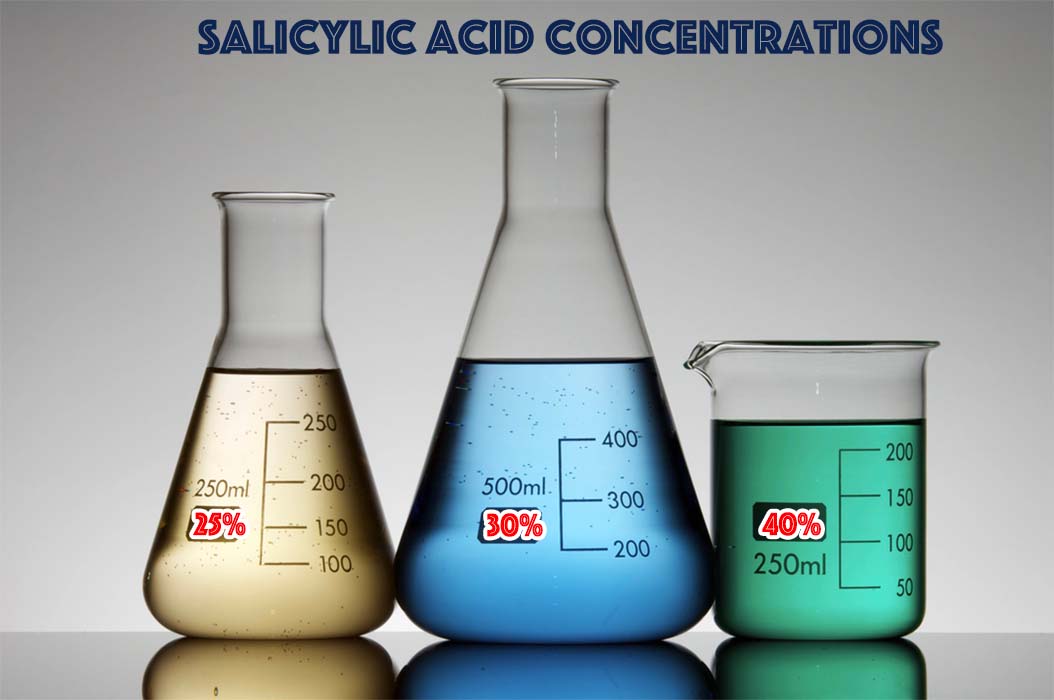
Salicylic Acid is available in three principal concentration ranges, allowing the practitioner to modulate visible surface effect, clinical intensity, and indication targeting according to the treatment area and the desired exfoliative outcome.

Salicylic Acid concentrations
Salicylic Acid concentration ranges used in professional superficial peeling protocols
25% or less

Very Superficial Controlled Effect

Lower concentration ranges are used when a mild, progressive, and more conservative superficial action is preferred.

  • Mild visual response
  • No visible frosting
  • Minimal surface reactivity
  • Suitable for sensitive treatment strategies and maintenance-oriented protocols
25–30%

Superficial Clinical Peeling Range

This intermediate range corresponds to a more clinically expressive salicylic response while remaining within a superficial professional peeling framework.

  • Visible pseudofrosting may appear in some areas
  • Partial precipitation or crystallization may occur
  • Well suited for acne-prone and congested sebaceous zones
  • Predictable professional exfoliative profile
30–40%

High-Expression Surface Activity

Higher concentration ranges produce a stronger visible surface response and are reserved for experienced, controlled professional use according to indication and area selection.

  • Thick white film may be observed
  • Crystallized salicylic acid can become visible
  • Pseudofrosting is more pronounced
  • Preferable for selected keratotic or more resistant superficial zones
Concentration choice should always be integrated with vehicle selection, anatomical zone, skin reactivity, and the intended clinical endpoint.
Clinical Reading Grid

Clinical Effects & Visual Appearance

The visible response of Salicylic Acid varies according to concentration range, crystallization profile, and surface interaction. This table helps translate visual appearance into practical clinical interpretation.

Salicylic Concentration & Visual Effects Rose / Blush Grey / Patchy White Dense
Physical Effect
Appearance
Apparent rose blush
Appearance
Crystallization
Appearance
Pseudo frosting
Concentration Range 25% or less 25–30% 30–40%
Effects
  • Mild erythematous hue
  • No visible frosting
  • No visible crystallization
  • Visible pseudofrosting in some areas
  • Partial precipitation or crystal deposits
  • Thick white film
  • Crystallized salicylic acid may become visible
  • More expressive surface reading
Depth
  • Very superficial
  • Superficial level
  • Superficial to expressive superficial level
Indications
  • Sensitive skin
  • Maintenance treatments
  • Acne-prone skin
  • Comedones
  • Oily zones
  • Oily skin
  • Seborrheic skin
  • Keratosis or thicker superficial zones

Rose / Blush

Physical Effect
Apparent rose blush.
Concentration Range
25% or less.
Effects
Mild erythematous hue, no visible frosting, no visible crystallization.
Depth
Very superficial.
Indications
Sensitive skin and maintenance treatments.

Grey / Patchy

Physical Effect
Crystallization.
Concentration Range
25–30%.
Effects
Visible pseudofrosting in some areas, partial precipitation or crystal deposits.
Depth
Superficial level.
Indications
Acne-prone skin, comedones, and oily zones.

White Dense

Physical Effect
Pseudo frosting.
Concentration Range
30–40%.
Effects
Thick white film, crystallized salicylic acid may become visible, more expressive surface reading.
Depth
Superficial to expressive superficial level.
Indications
Oily skin, seborrheic skin, and selected keratotic superficial zones.
Visual reading should always be interpreted together with vehicle selection, anatomical zone, and the practitioner’s intended superficial endpoint.
Vehicle Comparison

Comparison Table: Salicylic Acid in Ethanol vs Glycerol

Beyond concentration alone, the clinical behavior of Salicylic Acid is strongly influenced by its vehicle. Ethanol and glycerol create different diffusion patterns, evaporation dynamics, irritation potential, and practical indications.

Salicylic Acid in Ethanol vs Glycerol Salicylic Acid in Ethanol Salicylic Acid in Glycerol
Vehicle Type
Ethanol Vehicle
  • Volatile
  • Fast-penetrating solvent
Glycerol Vehicle
  • Humectant
  • Viscous
  • Slower penetration
Polarity Medium polarity Low polarity / more hydrophilic behavior in practice
Solubility
  • High
  • Up to 20%
  • Moderate
  • Approximately 5–10%
Evaporation Rapid Very slow
pH Effect
  • More acidic feel
  • Dries fast
  • Buffering effect
  • Softer clinical feel
Irritation Potential
  • Higher
  • Especially on mucosa-adjacent or delicate skin
  • Low to moderate
Esterification Risk
  • Higher theoretical reactivity
  • More dehydration of epithelium
  • May increase burn-like discomfort in fragile zones
  • Lower
  • Hydration matrix tends to reduce aggressive surface response
  • No clinically relevant esterification concern in practical use
Stinging / Burning
  • Common
  • Especially on sensitive or damaged skin
  • Rare
  • Less pronounced than with alcohol-based vehicles
Use on Intimate Areas
  • Not recommended
  • Avoid on highly reactive mucosa-adjacent zones
  • Preferred for delicate intimate applications
  • Better suited for genital hyperchromia protocols
Specific Indications
  • Oily zones
  • Non-sensitive zones
  • Selected keratotic areas
  • Sensitive skin
  • Thin skin
  • Hyperpigmented mucosa-adjacent skin
  • Intimate applications

Salicylic Acid in Ethanol

Vehicle Type
Volatile, fast-penetrating solvent.
Polarity
Medium polarity.
Solubility
High, up to 20%.
Evaporation
Rapid.
pH Effect
More acidic feel, dries fast.
Irritation Potential
Higher, especially on delicate skin.
Esterification Risk
Higher theoretical reactivity, more dehydration of epithelium, stronger discomfort in fragile zones.
Stinging / Burning
Common, especially on sensitive or damaged skin.
Use on Intimate Areas
Not recommended.
Specific Indications
Oily zones, non-sensitive zones, selected keratotic areas.

Salicylic Acid in Glycerol

Vehicle Type
Humectant, viscous, slower penetration.
Polarity
Low polarity with a softer hydrophilic practical behavior.
Solubility
Moderate, approximately 5–10%.
Evaporation
Very slow.
pH Effect
Buffering effect and softer clinical feel.
Irritation Potential
Low to moderate.
Esterification Risk
Lower, with a hydration matrix that reduces aggressive surface response.
Stinging / Burning
Rare and generally less pronounced.
Use on Intimate Areas
Preferred for delicate intimate applications and genital hyperchromia protocols.
Specific Indications
Sensitive skin, thin skin, hyperpigmented mucosa-adjacent skin, intimate applications.
Vehicle selection modifies not only tactile feel but also clinical tolerability, visible response, and anatomical appropriateness.

Clinical Integration & Combinations

Salicylic Acid is rarely used as an isolated intervention. Its clinical value increases significantly when integrated into structured protocols combining preparation, controlled application, and post-treatment modulation.

Preparation
Surface Conditioning
  • Aseptiskin for non-alcoholic cleansing
  • Preserves markings and avoids unnecessary dehydration
  • Optional microabrasive refinement for comedonal areas
Application
Controlled Lipophilic Action
  • Target sebaceous and congested zones
  • Adapt vehicle according to clinical indication
  • Monitor crystallization and pseudofrosting patterns
Post Care
Barrier Modulation
Advanced Combinations
In selected protocols, Salicylic Acid may be integrated with TCA applications or combined with Peeling de Luxe Plus for frost modulation, as well as metabolic formulations to support long-term epidermal balance and functional photoprotection.

Clinical Questions & Practical Clarifications

Is Salicylic Acid a superficial peel?
Yes. Salicylic Acid belongs to superficial peeling agents. However, its lipophilic behavior allows a more targeted follicular action compared to purely hydrophilic acids.
Why does Salicylic Acid sometimes appear white?
The white appearance corresponds to crystallization and pseudofrosting rather than true protein coagulation. This is a physical precipitation phenomenon, not a necrotic endpoint.
What is the difference between ethanol and glycerol formulations?
Ethanol provides rapid penetration and evaporation but may increase irritation. Glycerol offers a more controlled diffusion, reduced irritation, and better tolerance in sensitive or intimate areas.
Can Salicylic Acid be used on sensitive or intimate areas?
Yes, when using an appropriate vehicle such as glycerol and controlled concentrations. Ethanol-based formulations should generally be avoided in these zones.
Does Salicylic Acid cause true frosting like TCA?
No. Unlike TCA, Salicylic Acid does not induce true protein coagulation frosting. The observed whitening is due to salicylic crystallization on the surface.
How should post-treatment irritation be managed?
Post-treatment care should focus on restoring barrier function using appropriate formulations such as lipid-replenishing or antioxidant-based creams, while avoiding excessive irritation or dehydration.
Professional Clinical Use

Start a Controlled Salicylic Acid Protocol

Select the appropriate concentration, adapt the vehicle, and integrate post-treatment modulation to achieve predictable superficial outcomes in sebaceous, congested, and hyperchromic skin.

Access is restricted to licensed medical professionals. Login is required to unlock professional purchasing and protocol integration.

Share this website on your social medias