
Wrinkles and Chemical Peel Strategies
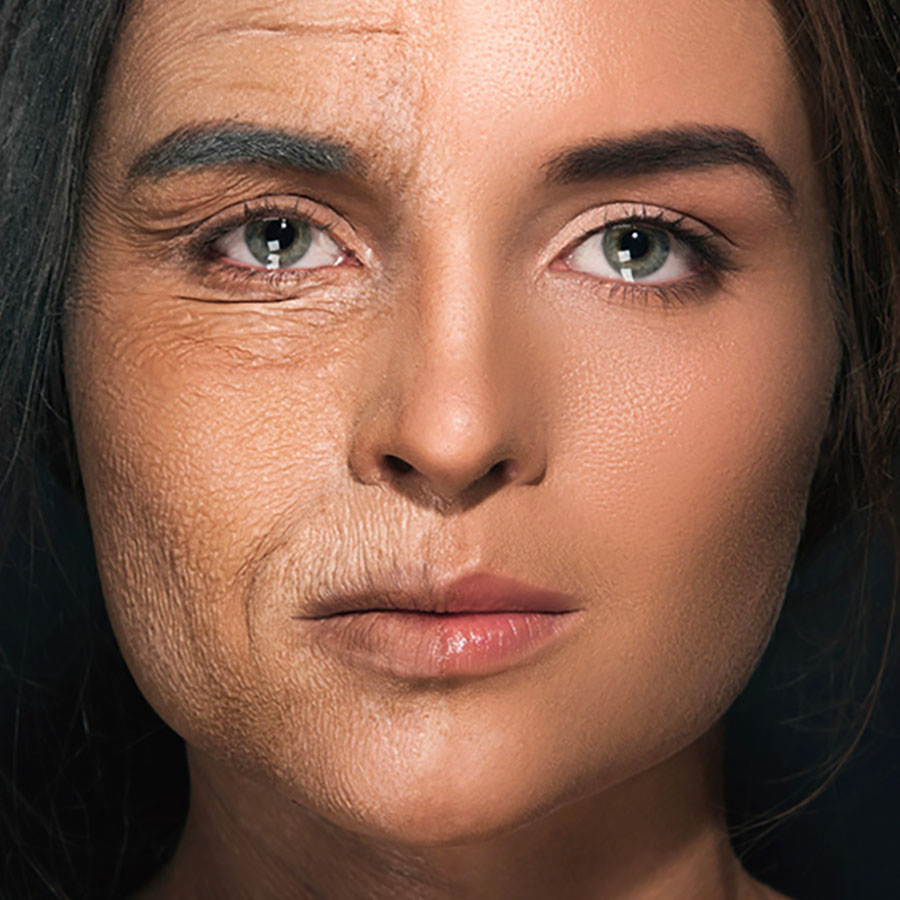
A structured clinical overview of wrinkles, including classification, pathophysiology, biochemical targets, and controlled chemical peel strategies for progressive skin improvement.
Wrinkles are not only a superficial sign of aging. They reflect a progressive alteration of epidermal renewal, dermal support, collagen organization, hydration dynamics, and in many cases repeated mechanical folding of the skin. For this reason, the treatment of wrinkles should not be reduced to a single product or a single procedure, but integrated into a layered clinical strategy aimed at texture refinement, tissue regulation, and visible long-term improvement.
Definition of Wrinkles
Wrinkles are visible cutaneous folds resulting from repetitive mechanical expression, progressive loss of dermal resilience, and age-related changes in the epidermal and connective tissue compartments.
In clinical practice, wrinkles should be understood as a multifactorial structural manifestation rather than a simple cosmetic surface defect. They develop through the interaction of intrinsic aging, environmental damage, decreased fibroblastic activity, reduced extracellular matrix quality, and repeated skin folding over time.
Fine lines may initially reflect superficial dehydration and irregular epidermal turnover, whereas deeper wrinkles usually indicate more advanced dermal compromise, repeated mechanical stress, and reduced capacity of the skin to maintain smooth tension distribution.
Clinical Classification
Not all wrinkles represent the same clinical situation. A meaningful classification helps distinguish superficial reversible lines from structurally established folds.
Dynamic Wrinkles
These appear mainly during facial expression and are linked to repeated muscular activity beneath the skin. Over time, repetitive contraction may leave a visible mark even at rest.
Static Wrinkles
These remain visible in the absence of movement and generally reflect established dermal collapse, reduced elasticity, collagen disorganization, and cumulative tissue aging.
Fine Superficial Lines
Usually associated with epidermal irregularity, dehydration, early photo-induced change, and uneven keratinocyte turnover. They often respond well to progressive superficial regulation.
Deep Structural Folds
These indicate more advanced support loss and frequently require a combined approach focused on skin quality, dermal remodeling, and in selected cases adjunctive functional support.
Pathophysiology
Wrinkle formation is driven by progressive changes in epidermal renewal, dermal architecture, hydration balance, oxidative exposure, and repeated fold mechanics.
Epidermal Irregularity
Slower renewal and uneven corneocyte shedding contribute to dullness, roughness, and exaggeration of superficial lines.
Dermal Matrix Decline
Reduced collagen support, elastic fiber alteration, and extracellular matrix deterioration diminish the skin’s ability to resist folding.
Chronic Photo-Induced Damage
Ultraviolet exposure accelerates textural roughening, collagen fragmentation, and irregular pigmentation, all of which visually reinforce wrinkle severity.
Hydration and Barrier Changes
Poor water retention and altered barrier function increase the visibility of fine lines and can make the skin appear prematurely aged.
Mechanical Repetition
Recurrent facial movement progressively imprints the skin. In some patterns, repeated local stress may act as a persistent wrinkle-forming factor.
Myotensive Contribution
Without redefining wrinkles as a purely muscular problem, it is clinically reasonable to recognize that subtle myotensive forces may participate in the persistence of certain expression-related folds.
This functional reading is important because it broadens therapeutic reasoning: some wrinkles are predominantly epidermal, others are dermal, and some carry a visible mechanical component that influences how quickly they recur after surface improvement.
Therapeutic Targets
The treatment of wrinkles should target the visible line itself as well as the biologic environment that allows the line to persist.
Primary Targets
- Refinement of irregular superficial texture
- Acceleration of controlled epidermal renewal
- Improvement in skin luminosity and surface uniformity
- Support of dermal quality through progressive stimulation
Secondary Targets
- Reduction of roughness that exaggerates line visibility
- Improvement in barrier comfort and hydration behavior
- Support of more homogeneous tone in photo-aged skin
- Reduction of recurrence factors related to repetitive folding patterns
In practical terms, the objective is not to “erase” wrinkles in a simplistic way, but to move the skin toward a more regulated, smoother, better-supported state in which the clinical prominence of wrinkles progressively diminishes.
pKa-Based Strategy
Acid selection in wrinkle-oriented peeling should follow chemical behavior and biologic intention, not simplified marketing categories.
A rational wrinkle protocol benefits from understanding how an acid behaves in relation to skin pH, depth dynamics, formulation, and clinical objective. Acids with lower pKa values tend to display stronger immediate bioavailability, while the final clinical effect also depends on concentration, vehicle, exposure time, buffering environment, and tissue indication.
Superficial Regulation
Useful for fine lines, dullness, and early textural aging where the main objective is smoother renewal and better surface homogeneity.
Progressive Stimulation
Appropriate when wrinkles are visibly established and require more than simple desquamation, while still respecting controlled clinical progression.
Functional Metabolic Support
Particularly relevant when wrinkle treatment is integrated into a broader skin-quality approach rather than an isolated ablative intervention.
Protocol Logic
Wrinkle protocols should be progressive, indication-based, and adapted to the depth, location, and dominant mechanism of the wrinkle pattern.
When Fine Lines Predominate
A progressive superficial program may be sufficient, especially when the clinical picture is dominated by roughness, dehydration lines, uneven tone, and early photoaging.
When Structural Wrinkles Predominate
The protocol should shift toward controlled stimulation, repeated sessions, and skin-quality support rather than one-time aggressive peeling.
When Photoaging Is Dominant
Peel logic should also address dyschromia, roughness, and cumulative oxidative damage, as these factors increase the visible depth of wrinkles.
When Repetitive Tension Persists
Some wrinkle patterns may remain clinically resistant if repeated folding forces continue to dominate. In such cases, the skin can still be improved significantly, but expectations should reflect this functional reality.
This is where a discreet functional reading becomes useful. The skin can be regulated chemically, but the long-term stability of certain wrinkles may also depend on whether the local fold pattern remains mechanically active. That observation does not change the identity of the page; it simply refines clinical judgment.
Clinical Results
Clinical improvement in wrinkles is progressive. The aim is smoother texture, better light reflection, reduced line prominence, and more coherent skin quality over time.
Clinical Summary and Treatment Perspective
This section provides a concise synthesis of the clinical meaning of wrinkles and the treatment logic behind wrinkle-oriented chemical peels.
Wrinkles are a clinical manifestation of progressive skin aging involving epidermal irregularity, dermal support loss, and repetitive folding of the skin. Their appearance is influenced by intrinsic aging, photo-induced structural decline, hydration changes, and in some cases persistent myotensive dynamics.
Chemical peel strategies for wrinkles should therefore be selected according to the type of wrinkle, the degree of structural fixation, and the dominant biological mechanism. Superficial lines may respond to controlled keratoregulation, while deeper wrinkles generally require a progressive skin-quality approach focused on stimulation, regulation, and repeated clinical coherence.
From a clinical standpoint, wrinkle treatment should not rely on oversimplified categories. A more advanced interpretation integrates chemistry, pKa behavior, formulation logic, barrier respect, and realistic evaluation of recurrent mechanical skin folding.
Frequently Asked Questions
Short clinical answers for practitioners and informed patients seeking a structured understanding of wrinkle treatment.
Are wrinkles the same as photoaging?
No. Wrinkles are a visible clinical manifestation, whereas photoaging refers to the broader ultraviolet-induced degeneration of skin structure and quality.
Can chemical peels improve wrinkles?
Yes. Chemical peels may improve wrinkles by refining epidermal texture, supporting skin renewal, and contributing to progressive enhancement of skin quality.
Do deep wrinkles respond the same way as fine lines?
No. Fine lines often improve faster, while deeper structural wrinkles generally require repeated protocols and more gradual clinical progression.
Is wrinkle formation only a skin problem?
Not always. Although wrinkles are primarily treated at the skin level, repeated expression and subtle tension patterns may contribute to persistence in selected clinical situations.