What do I treat?
Start with the clinical indication — not with the product catalogue.

A practical clinical guide to help you identify which product to use, why to use it, when to use it and where it belongs in the treatment sequence. Start with the indication — then move from product selection to home care, professional care and protocol integration.
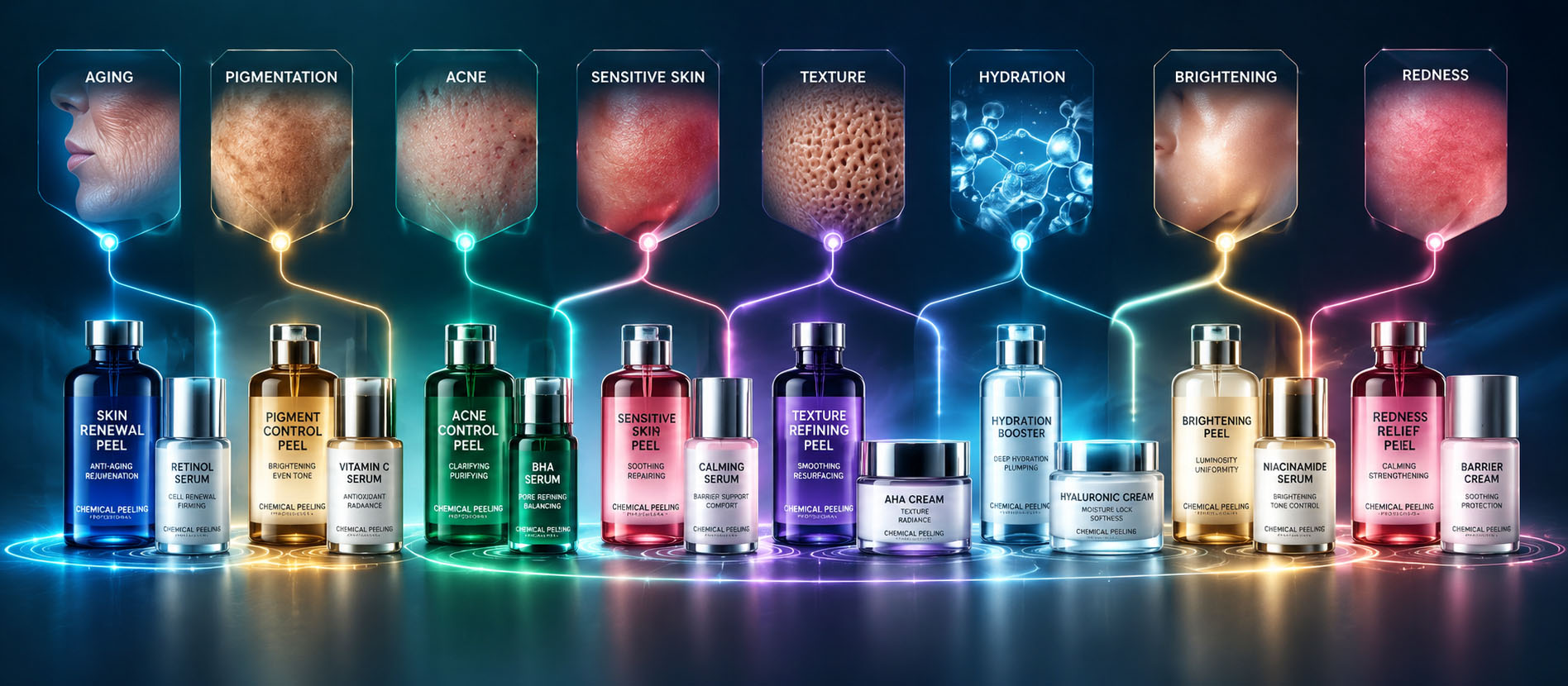
You do not need to memorize every product or every protocol. Begin with the clinical objective, identify the required function, choose the appropriate product and then decide where it belongs in the treatment sequence.
Start with the clinical indication — not with the product catalogue.
Match the indication to the required product function, then select the product that fulfils that role.
Place the selected product in its practical treatment context: daily care, periodic use or professional treatment.
Start with the smallest coherent pathway. Extend it only when the indication, treatment phase or clinical response requires it.
Product selection should begin with what you are trying to treat. Choose the dominant clinical indication first. The detailed matrix will then help you connect that objective with the appropriate product function, timing and protocol.
Uneven pigmentation, dyschromia and pigment-focused treatment objectives.
Define the required functionAcne-prone skin and treatment pathways directed toward active acne management.
Define the required functionVisible signs associated with cumulative environmental and photo-induced skin aging.
Define the required functionRoughness and visible surface irregularities requiring a texture-focused strategy.
Define the required functionPore-focused treatment when visible pore appearance is a principal clinical concern.
Define the required functionStrategies focused on improving the appearance of dull, uneven or visually fatigued skin.
Define the required functionSituations in which tolerance and treatment intensity require particular consideration.
Assess suitability firstBarrier-support and recovery needs before, between or after corrective interventions.
Define the support roleDo not begin with the product name. Begin with the clinical objective. Use the five functional families below to identify the smallest coherent product selection, then open the detailed product page when more information is required.
Prepare the skin or treatment field before the active clinical step.
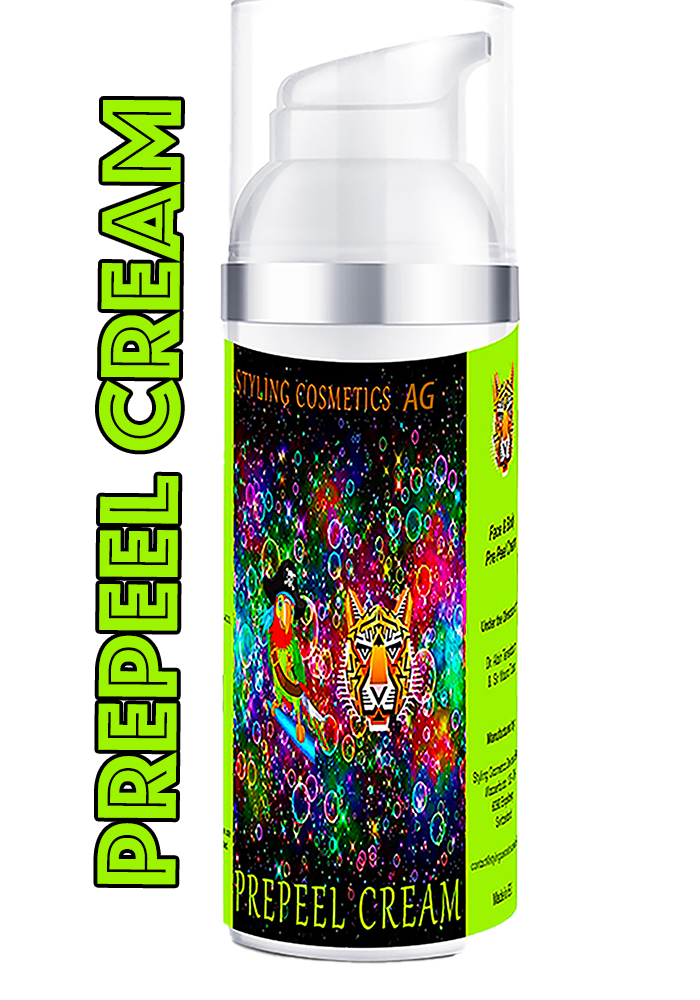
Act directly on surface renewal, texture, exfoliation or corrective treatment objectives.
Select according to the biological, metabolic, photoprotective or targeted skin objective.
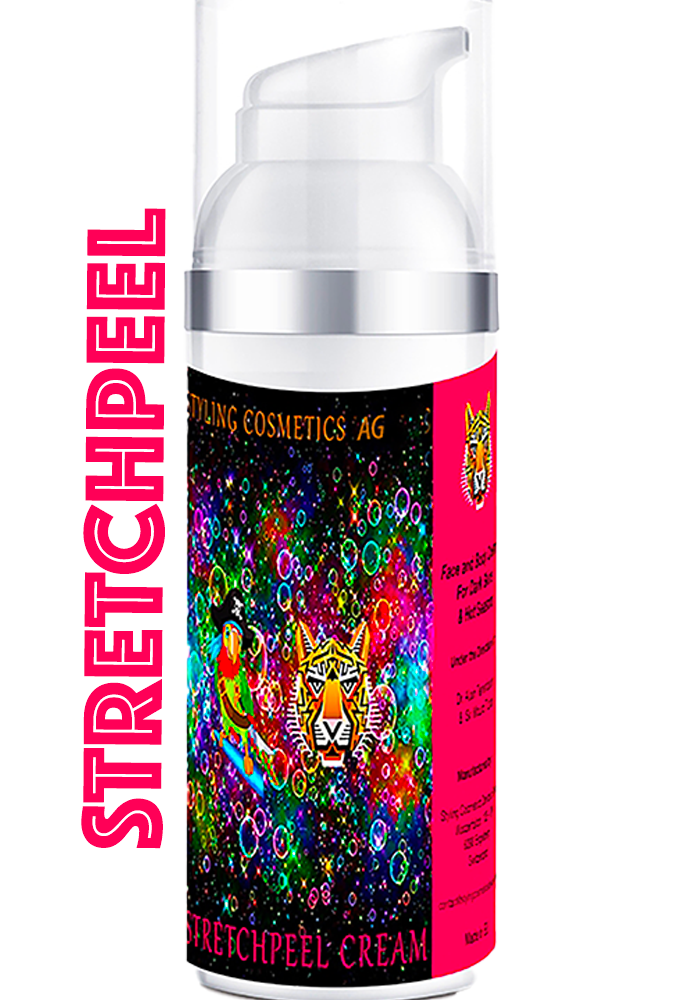
Support recovery, hydration, thermal comfort or anatomically delicate areas.
A separate category for immediate cosmetic presentation — not corrective treatment.
Clinical Selection Principle
The purpose of this matrix is selection, not accumulation. Begin with the dominant clinical objective, identify the required function, select the smallest coherent product pathway, and expand the protocol only when there is a clear clinical reason to do so.
Start with the clinical problem, define the treatment objective, then build the smallest coherent pathway. The purpose is not to use every available product — it is to understand what comes first, what performs the corrective step and what supports recovery or maintenance.
Build a controlled pigment-correction strategy while integrating preparation, corrective treatment, photoprotection and recovery.
Full sequencing belongs in the dedicated clinical protocol.
View Protocol →Approach melasma as a structured pigment-management pathway rather than as an isolated aggressive peeling event.
Use the complete protocol for sequencing and clinical adaptation.
View Protocol →Select the strategy according to the acne presentation rather than treating every acne patient through the same pathway.
Active acne and acne scars are separate clinical pathways.
View Protocol →Move from active-acne management to a dedicated advanced pathway for residual surface and textural alteration.
Advanced pathway — follow the complete protocol sequence.
View Protocol →Improve visible pore appearance through a structured surface refinement strategy rather than a single isolated product.
Choose the intensity and sequence from the dedicated protocol.
View Protocol →Address roughness, loss of radiance, progressive textural aging, uneven pigmentation and loss of epidermal uniformity through progressive correction and structured maintenance.
Roughness, dullness and loss of radiance are integrated into this broader photoaging pathway.
View Protocol →Start with the indication — not with the number of products available. Identify the clinical objective, select the smallest coherent pathway, then expand the strategy only when the indication and tissue response justify it.