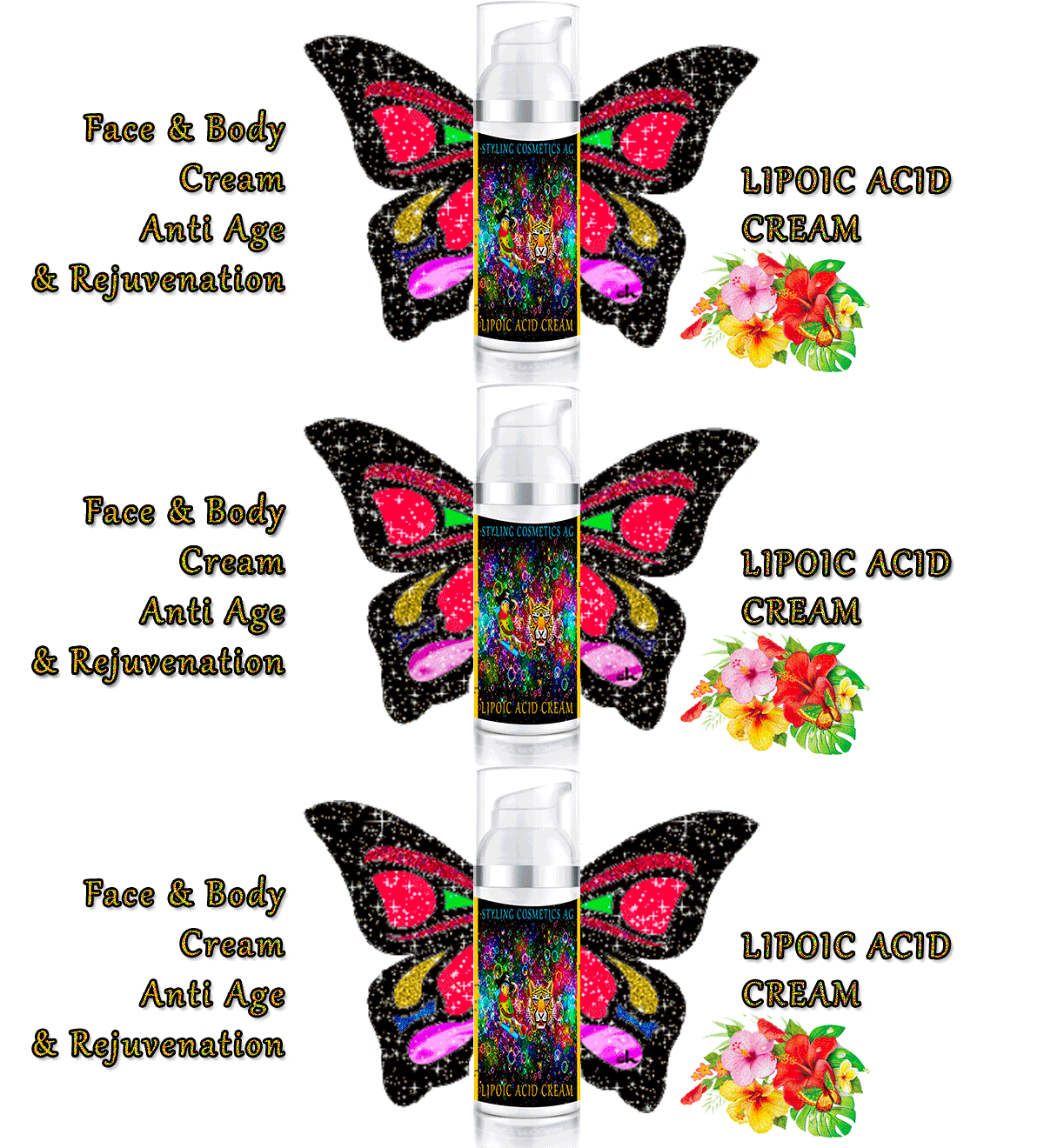
lipoic-acid-clinic-size

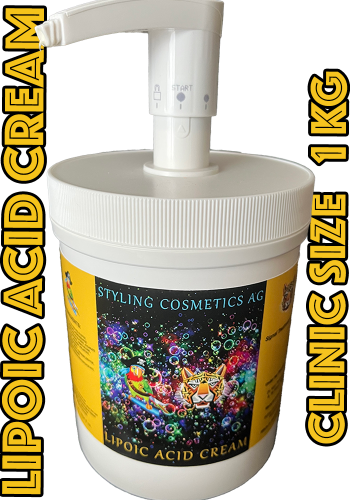
Lipoic Acid Clinic Size

The metabolic key to controlled depth targeting.

Lipoic Acid allows then to get medium and deep peels using low concentrated acids .

Professional Clinic Format

The Clinic Size format is designed for structured professional use within repeated aesthetic protocols. It supports optimized workflow, protocol consistency and cost-efficiency in clinical environments.

Intended for high-frequency protocol integration under professional supervision.


Functional Classification & Clinical Positioning

Functional Classification

Advanced Clinical Approach, Metabolic Clinical Approach

Primary Clinical Function

Support of cellular redox balance and metabolic skin protection.

Clinical Approach

Metabolic clinical approach based on antioxidant signaling and cellular metabolic support, without inducing exfoliation or tissue disruption.

Specific Indications

Where Lipoic Acid Cream provides the highest clinical value in your protocol.
Acne Vulgaris Support
Adjunctive care for papular inflammatory lesions, especially when lesions persist after metabolic preparation or peel-off protocols. Helps support skin comfort and protocol continuity in acne-prone patients.
Seborrheic & Congested Skin
Particularly useful in seborrheic skin with congestion and uneven texture, when targeted topical modulation is required in specific zones (forehead, temples).
Post-Peel Adjunctive Step
Can be introduced after peel-off removal as an adjunctive protocol step when the goal is to support localized recovery and address residual inflammatory activity.
Resistant Areas Focus
Recommended when lesions concentrate in resistant areas (forehead and temporal zones), where inflammatory papules can persist despite general improvement.
Clinical note: transient erythema may appear shortly after application and can be interpreted as a normal response consistent with active topical interaction.
Extended Clinical Applications
  • Used prior to corrective or exfoliative protocols to enhance active ingredient penetration and epidermal receptivity.
  • Improves tolerance in medium and deep peeling strategies when integrated within layered treatment planning.
  • Supports acne-oriented corrective protocols as part of sequential therapeutic approaches.
  • Assists in stretch mark protocols when combined with structured pre-peel preparation.
  • Useful in skin presenting oxidative stress or reduced metabolic resilience, particularly in environmentally exposed patients.

Clinical Case – Papular Acne Management

See how Lipoic Acid Cream was used as an adjunctive tool to bring inflammatory papules to the surface following 30 Min Peel Off application.

View Clinical Case

Clinical Highlights

Metabolic modulation without increased chemical aggressiveness.

Redox Modulation

Supports intracellular antioxidant balance and enhances cellular resilience within corrective aesthetic protocols.

Penetration Facilitation

Enhances the functional depth of associated formulations without increasing acid concentration or procedural intensity.

Tolerance Optimization

Improves skin tolerance in medium and deep peeling strategies while maintaining controlled biological response.

This metabolic positioning allows deeper and more predictable outcomes without escalation of chemical aggressiveness.

Product Scope: What Lipoic Acid Is / What It Is Not

Clear positioning to prevent confusion with standalone peeling agents.

What It Is

  • A metabolic penetration enhancer used within controlled protocols.
  • A redox-support formulation improving cellular resilience and tolerance.
  • A protocol amplifier designed to enhance functional efficacy without escalation.
  • A supportive step to improve predictability of corrective and exfoliative strategies.
  • An adjunct tool in acne-oriented and stretch mark protocols when clinically indicated.

What It Is Not

  • Not a standalone peeling acid intended to create direct desquamation by itself.
  • Not a high-concentration aggressive exfoliant used for chemical intensity escalation.
  • Not a replacement for primary peel agents used to set depth and peeling kinetics.
  • Not a one-size-fits-all treatment: use depends on clinical protocol design.
  • Not intended for uncontrolled or non-supervised use outside a structured routine.

Positioning summary: Lipoic Acid enhances tolerance and functional depth through metabolic support—not through increased chemical aggressiveness.

Clinical Parameters

Formulation Type

Cream-based formulation

Topographic Categories

Face , Body , Neck, Décolleté, Periocular, Hands

Phototypes

Downtime

None

Desquamation Profile

No desquamation

Key Active Ingredients

  • Lipoic Acid – redox-active metabolic modulator supporting cellular antioxidant balance.
  • Citric Acid – pH-modulating component assisting controlled penetration.

Why Lipoic Acid Is Irreplaceable in Penetration-Based Protocols

Why Lipoic Acid Is Irreplaceable

A metabolic strategy to increase functional depth through cellular support — not through higher chemical aggressiveness.

Enhances Depth Without Escalation

Improves the functional efficacy of associated corrective agents without requiring increased acid concentration or more aggressive procedural steps.

Optimizes Cellular Tolerance

Supports redox balance and cellular resilience, improving tissue tolerance and predictability in medium and deep peeling strategies.

Improves Protocol Efficiency

Acts as a protocol amplifier: stronger clinical response is achieved through metabolic optimization rather than chemical load escalation.

Reduces the Need for Aggressive Escalation

By improving penetration and tolerance, it can reduce the tendency to compensate with higher concentrations or overly aggressive procedural intensity.

Clinical conclusion: Lipoic Acid supports a metabolic route to depth — enabling more controlled outcomes without increasing chemical aggressiveness.

Clinical Use & Application

Protocol-driven usage designed to enhance tolerance and functional efficacy without escalation of chemical aggressiveness.

How to Use

  • Apply a thin, even layer to clean, dry skin.
  • Use as a preparatory step before corrective or exfoliative protocols.
  • May be integrated in layered protocol designs when clinically indicated.
  • Do not use as a standalone peeling agent.

Frequency Guidance

  • Typically used 2–4 times per week in preparation phases.
  • May be used daily in short, supervised protocol windows.
  • Duration is protocol-dependent (commonly 7–14 days prior).
  • Adjust according to skin tolerance and clinical objectives.

Key Clinical Notes

  • Objective: improve tolerance and predictability, not induce direct desquamation.
  • Compatible with metabolic solutions and corrective strategies.
  • Avoid use on irritated or compromised skin barriers.
  • Professional supervision recommended for intensive protocols.

Note: exact schedule and sequencing depend on the selected peeling strategy and patient skin reactivity.

Core Product of the Metabolic Solutions Strategy

Within the Metabolic Solutions ecosystem, Lipoic Acid functions as a central modulation component. It supports protocol depth optimization through penetration control and metabolic tolerance, reinforcing a structured non-escalation approach.

Combinations with Other Products

Before – Skin Preparation

After – Post-Procedure / Maintenance

Alternate – Synergy & Comfort Modulation

Clinical Depth Targeting

In aesthetic protocols, tissue issues are not always superficial. Dehydration and hyperchromia may involve deeper layers and should not be underestimated. Lipoic Acid is positioned to enhance functional depth through penetration support and metabolic tolerance—rather than through concentration escalation.

Deep Dehydration Support

Dehydration can be superficial, but it may also involve deeper layers. In such cases, hydration strategies must target more than the surface.

  • Lipoic Acid + Les Félins (rapid-penetration moisturizer) supports hydration beyond the superficial barrier.
  • Lipoic Acid + Papaya Cream can be used as a complementary moisturizing synergy within controlled routines.

Deep Hyperchromia Targeting

Hyperchromia may be deeper than expected, not only epidermal. Protocol design should therefore consider depth targeting.

  • Lipoic Acid + Stretchpeel supports deeper hyperchromic targeting.
  • Objective: improve efficacy through penetration support rather than multiplying aggressive steps.

Low-Concentration Acids — Increased Function Without Escalation

In selected protocols, a low-concentration TCA can be combined with Lipoic Acid to enhance functional penetration, instead of increasing TCA concentration. The same strategic logic may apply to Salicylic Acid when the objective is depth and efficacy through controlled penetration rather than chemical escalation.

Professional protocol design and supervision recommended. Depth targeting is always patient-dependent.

These protocol examples naturally lead to a broader question: how should depth in peeling strategies truly be defined?

Revisiting Peel Depth Classification

Traditional classifications often define peel depth based primarily on acid concentration. However, concentration alone does not determine biological depth.

Depth Is a Function of Penetration + Tissue Response

  • Low-concentration TCA may achieve significant functional depth when penetration is optimized.
  • Depth is influenced by tissue permeability, redox state, and protocol sequencing.
  • Escalating concentration is not the only pathway to deeper clinical effect.
  • Metabolic support may allow controlled penetration without the adverse profile of traditional “deep peels”.

By combining Lipoic Acid with lower-concentration acids such as TCA or salicylic acid, clinicians may target deeper layers while potentially reducing complications associated with high-concentration deep peeling strategies.

Clinical interpretation of depth should integrate penetration dynamics and tissue biology, not concentration alone.

The Functional Depth Model

A structured interpretation of depth beyond simple concentration-based classification.

A — Metabolic Enhancer

Lipoic Acid supports intracellular redox balance and improves cellular tolerance, creating a biological environment that permits deeper functional response.

B — Penetration Amplifier

By modulating tissue permeability and tolerance, penetration of associated acids may be enhanced without increasing concentration.

C — Controlled Deep Targeting

Lower-concentration TCA or salicylic acid may achieve meaningful functional depth when combined with metabolic support, potentially reducing risks associated with traditional high-concentration “deep peel” strategies.

D — A Shift in Depth Paradigm

Functional depth should integrate penetration dynamics, tissue biology, and metabolic tolerance — not concentration alone.

Proposed conceptual equation:
Functional Depth = Penetration × Tissue Response × Metabolic Tolerance

Usage Context

Usage Context – Clinic Size

The Clinic Size format is intended for structured professional environments where repeated protocol integration and optimized workflow are required.

High-Frequency Protocol Use

  • Designed for repeated clinical application.
  • Supports consistent protocol depth modulation.
  • Optimized for professional workflow efficiency.
  • Facilitates standardized protocol execution.

Structured Clinical Integration

  • Integrated within medium and advanced corrective strategies.
  • Supports non-escalation protocol design.
  • May be combined with corrective and metabolic solutions.
  • Enhances penetration control without concentration escalation.

Professional Environment

  • Intended for aesthetic clinics and medical practices.
  • Supports predictable tissue response.
  • Adaptable to protocol layering strategies.
  • Requires clinical judgment and supervision.

Professional use only. Protocol-dependent integration under qualified supervision.

Frequently Asked Questions – Clinic Size

Clarifications regarding professional integration, workflow and protocol structure.

Is the formulation different from the standard version?

No. The formulation remains identical. The Clinic Size format is designed for repeated professional use and optimized protocol integration.

Who is the Clinic Size format intended for?

It is intended for aesthetic clinics and medical professionals performing structured corrective protocols on a regular basis.

Can it be used within non-escalation strategies?

Yes. The Clinic Size format supports repeated implementation of penetration-based depth strategies without relying on acid concentration escalation.

Is professional supervision required?

Yes. The Clinic Size format is intended exclusively for professional environments and structured clinical protocols.

Does Clinic Size replace traditional deep peels?

No. It does not replace traditional classifications. It supports alternative depth strategies based on penetration control and metabolic tolerance.

Clinical Summary

Lipoic Acid – Clinic Size is a metabolic penetration enhancer designed for structured professional environments. It supports controlled depth targeting through optimization of tissue permeability and metabolic tolerance, reinforcing non-escalation strategies within repeated corrective protocols.

Identical formulation. Optimized format. Structured clinical integration.

Professional Purchase – Clinic Size

Designed for structured clinical integration and high-frequency professional use.

Request Clinic Access
Professional Format
Optimized for repeated clinical protocol integration.
Secure Professional Checkout
Encrypted processing via structured clinical distribution.
Clinical Integration Support
Structured protocol guidance available upon request.

Professional use only. Intended for qualified medical and aesthetic environments.

swiss-made
top-quality

Share this website on your social medias
cream2-eye-contour
pdl-plus
cream-felins
cream-gradient
cream2-microabrasive
cream-ormes-des-sioux
cream-papaya
cream-postpeel
cream-prepeel
cream-rose-du-desert
cream-stretchpeel
cream-peel-superstar
cream2-kosmopeel
cream2-lipoic-acid
cream2-eye-contour
pdl-plus
cream-felins
cream-gradient
cream2-microabrasive
cream-ormes-des-sioux
cream-papaya
cream-postpeel
cream-prepeel
cream-rose-du-desert
cream-stretchpeel
cream-peel-superstar
cream2-kosmopeel
cream2-lipoic-acid