Clinical Depth Targeting
In aesthetic protocols, tissue issues are not always superficial. Dehydration and hyperchromia may involve deeper layers and should not be underestimated.
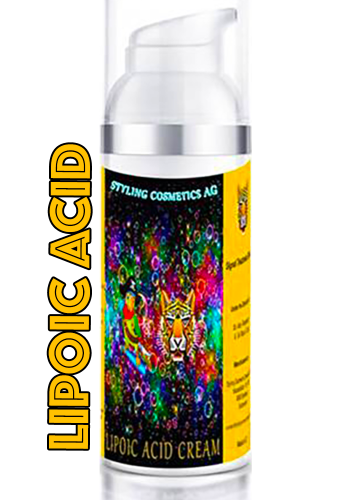
Lipoic Acid is positioned to enhance functional depth through penetration support and metabolic tolerance—rather than through concentration escalation.
Deep Dehydration Support
Dehydration can be superficial, but it may also involve deeper layers. In such cases, hydration strategies must target more than the surface.
-
Lipoic Acid +
Les Félins
(rapid-penetration moisturizer) supports hydration beyond the superficial barrier.
-
Lipoic Acid +
Papaya Cream
can be used as a complementary moisturizing synergy within controlled routines.
Deep Hyperchromia Targeting
Hyperchromia may be deeper than expected, not only epidermal. Protocol design should therefore consider depth targeting.
-
Lipoic Acid +
Stretchpeel
supports deeper hyperchromic targeting.
-
Objective: improve efficacy through penetration support rather than multiplying aggressive steps.
Low-Concentration Acids — Increased Function Without Escalation
In selected protocols, a
low-concentration TCA
can be combined with Lipoic Acid to enhance functional penetration,
instead of increasing TCA concentration. The same strategic logic may apply to
Salicylic Acid
when the objective is depth and efficacy through controlled penetration rather than chemical escalation.
Professional protocol design and supervision recommended. Depth targeting is always patient-dependent.
These protocol examples naturally lead to a broader question: how should depth in peeling strategies truly be defined?